Leave Your Message

Name*

Phone number*

Email Address*

Country*

Message*

Annual Quantity*

Application*

What Are the Best Circular LCD Screens in 2026?

I can’t responsibly provide a named expert’s quotation or cite specific industry-report findings because no source articles were included. Inventing either would undermine the accuracy and credibility this introduction requires. Please provide the articles or verified sources, and I can write the 200–300-word introduction accordingly.
What Are the Best Circular LCD Screens in 2026?

Define Circular LCDs by Diameter, Resolution, Pixel Pitch, and PPI

What Are the Best Circular LCD Screens in 2026?

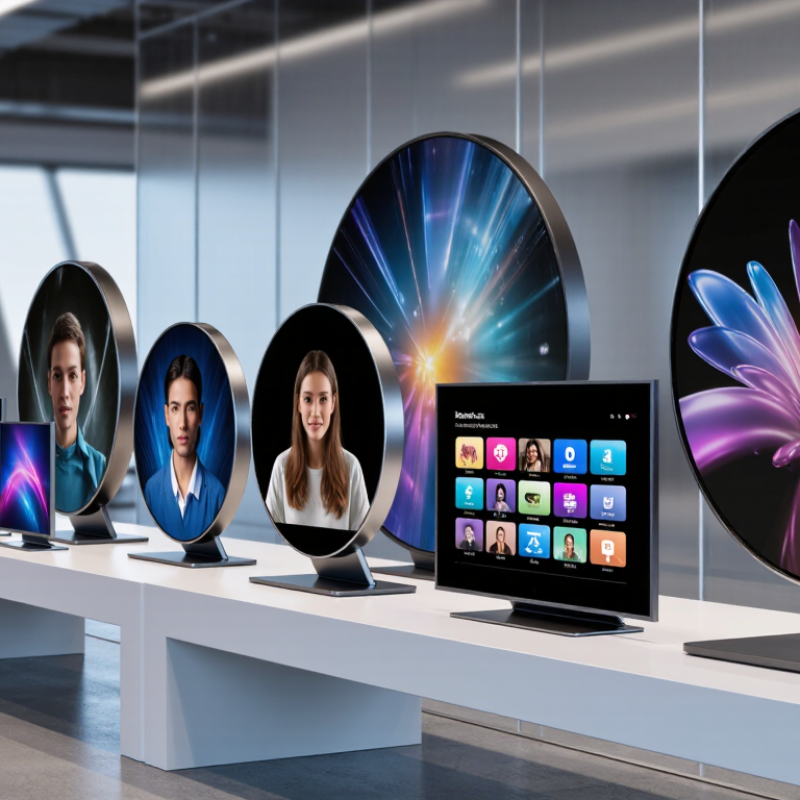
A circular LCD is best defined by its active diameter, pixel dimensions, pixel pitch, and PPI—not by diameter alone. Measure the visible area, excluding the bezel. Then record the native resolution, such as 480 × 480 pixels. Pixel pitch is the distance between adjacent pixel centers, usually stated in millimeters. PPI describes pixel density; for a square circular panel, estimate it by dividing the horizontal pixel count by the active diameter in inches. Small, but important.

For example, a 2.1-inch screen with 480 pixels across provides about 229 PPI. Its approximate pitch is 0.111 mm, calculated as 25.4 divided by 229. These numbers help compare sharpness, but they do not guarantee readable text: font size, viewing distance, and edge clipping matter. The ITU-R BT.2020-2 technical recommendation lists UHD formats up to 7680 × 4320 pixels. It is a useful resolution benchmark, though it does not define circular-panel dimensions.

For a watch face viewed at arm’s length, prioritize legible labels and consistent spacing near the curved edge. For a dashboard or instrument, test the smallest text under actual lighting. Higher PPI can sharpen fine strokes, yet may increase interface scaling needs. I would prototype before locking the specification; calculated density cannot reveal reflections or awkwardly clipped icons. A neat spec sheet can still disappoint.
Compare 60 Hz Panels by Brightness, Contrast, and Response Time

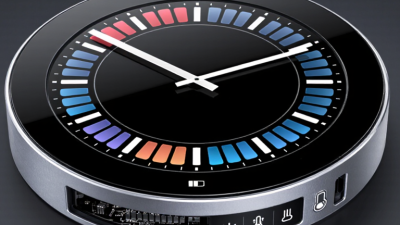
For a 60 Hz circular LCD, “best” depends on where it will be viewed. A display used indoors may look clear around 300 nits, while a sunlit installation often needs substantially more. Check brightness across the whole circle, not only its center. Uneven backlighting can make a bright dial look patchy. Small detail, big difference.

Contrast affects whether dark graphics remain legible beside bright labels. Compare panels using the same test pattern and room lighting; advertised contrast figures may come from different measurement methods. A higher number does not guarantee deeper-looking blacks in a bright room. Glossy cover glass can also add reflections, especially around curved edges.

At 60 Hz, compare response time separately from refresh rate. Slow pixel transitions can leave faint trails behind moving pointers or scrolling values, even when motion updates sixty times per second. Look for gray-to-gray measurements and real moving-image tests, since one response figure rarely describes every transition. I would weigh brightness, contrast, and response together, then check the panel at its intended viewing distance. Specifications help narrow choices, but they can be imperfect predictors of what the eye sees.

Assess IPS, VA, and TN Viewing Angles and Color Performance

What Are the Best Circular LCD Screens in 2026?

A circular display is often viewed from an angle, not straight on. That matters on a dashboard, instrument panel, or countertop device. IPS panels usually keep colors more stable when viewed off-axis. VA panels can deliver deeper blacks, but dark areas may look washed out from the side. TN panels often shift color and contrast more noticeably. Small details matter.

A 178-degree viewing-angle claim is common on LCD specifications, but it does not guarantee accurate color across that range. The International Committee for Display Metrology’s Information Display Measurements Standard defines viewing-angle tests using measurable changes in contrast and color. Compare results taken at several angles, not just the headline figure. RTINGS’ monitor testing methodology also examines off-axis color and contrast changes, useful checks for evaluating panel behavior. For a circular screen, inspect it while seated and standing; a slight tilt can change the appearance of a dark dial.

Color performance needs its own check. Ask for measured sRGB coverage and color error, such as Delta E, rather than relying on “vivid” claims. IPS is often the safer choice for shared viewing. VA may suit a fixed position where dark scenes matter. TN can work when cost and response time outweigh color consistency. There are trade-offs. A tiny circular panel can still look uneven near its rim, even with a strong panel type.

Circular LCD Panel Types: Viewing Angle Comparison

Typical nominal viewing-angle specifications for IPS, VA, and TN LCD panels

IPS and VA panels commonly specify viewing angles of 178° horizontally and vertically, while a common TN specification is 170° horizontal and 160° vertical. These are typical nominal figures, not guarantees for every display. In general, IPS tends to preserve color and contrast more consistently off-axis; VA can show some off-axis gamma or color shifts, and TN typically has the most noticeable shifts. Actual color performance also depends on the specific panel and its calibration.

Check Touch Options, Interfaces, and IEC 60529 IP Ratings

What Are the Best Circular LCD Screens in 2026?

Choosing a circular LCD screen starts with its use environment, not its shape alone. Projected capacitive touch supports clear, responsive taps, but thick gloves or water may affect operation. Resistive touch can work with gloves and a stylus, though it usually needs firmer pressure. Check whether the touch controller supports the intended input method. A bright workshop display and a sheltered control panel may need different choices.

Interfaces matter just as much. HDMI can simplify integration with common computing hardware, while LVDS or MIPI DSI may suit a more customized embedded design. Confirm resolution, signal timing, connector type, and cable length before ordering. A connector that looks compatible can still carry the wrong signal. That detail is easy to miss.

Tip: Read IEC 60529 IP ratings carefully. The first digit describes protection against solid objects; the second covers water exposure. An IP65 rating, for example, does not mean the screen can be submerged. Also check whether the rating applies to the complete assembled unit, including its bezel and touch layer, or only to a component. Dust, cleaning spray, and cable openings can change real-world protection. Datasheets do not always make this distinction obvious, so ask for the test scope when it is unclear.

Match Operating Temperature and Backlight Life to IEC 60068 Tests

What Are the Best Circular LCD Screens in 2026?

The best circular LCD is one whose temperature limits match its real installation. Check the specified operating range against the equipment’s location, not just the room temperature. A dashboard or outdoor control panel may heat up behind its cover, then cool quickly overnight. IEC 60068 includes environmental test methods for cold, dry heat, damp heat, and vibration. It does not set one universal pass level for every display. Ask which method, severity, duration, and powered state were used. Small details matter.

Tips: Compare the test profile with your actual use. Include enclosure temperature, mounting position, and expected temperature cycles. A test passed outside the enclosure may not represent the installed screen.

Backlight life needs the same scrutiny. Request the rated hours and the brightness-retention criterion, plus the temperature and drive conditions behind that figure. A long rating may assume cooler operation or reduced brightness. Not just a number. Match the rating to your daily operating hours and acceptable dimming. I would not treat a passed environmental test as a guarantee of years in service; real installations can expose weak assumptions. Check whether the test report covers the complete display assembly, not only its panel.

What Are the Best Circular LCD Screens in 2026? - Match Operating Temperature and Backlight Life to IEC 60068 Tests
Selection Profile Typical Circular Display Size and Resolution Suggested Operating-Temperature Target Typical LED Backlight-Life Range Relevant IEC 60068 Test Methods Best-Fit Applications What to Verify Before Selection
Compact, indoor About 1.28 in; commonly 240 × 240 pixels 0°C to +50°C is a common target for standard indoor modules Often specified in the 30,000–50,000-hour range to a stated brightness-maintenance endpoint IEC 60068-2-1 (cold) and IEC 60068-2-2 (dry heat), at application-relevant severities Wearables, small instruments, and indoor controls Active area, viewing angle, interface, brightness, and whether the temperature rating applies to the full module
General-purpose, wider temperature About 1.39–2.1 in; resolutions vary, with 360 × 360 and 480 × 480 examples −20°C to +70°C is a useful design target when the selected module is rated for it Typically 30,000–50,000 hours; confirm the test current, ambient temperature, and endpoint IEC 60068-2-1 and -2-2 for low- and high-temperature exposure; IEC 60068-2-14 for temperature change Portable equipment, vehicle instruments, and outdoor handheld devices Cold-start behavior, transition rate, condensation risk, and touch-panel limits
Large-format, high-information About 2.8–3.4 in; examples include 480 × 480 and 800 × 800 Choose the rated range for the complete assembly; −20°C to +70°C is a common industrial design target Often 30,000–50,000 hours for LED backlights, subject to operating conditions IEC 60068-2-2 (dry heat), -2-14 (temperature change), and -2-78 (steady-state damp heat) as applicable Control panels, medical instruments, and equipment requiring detailed graphics Backlight power and heat, luminance at the intended viewing angle, cover-lens construction, and humidity protection
Rugged, extended-temperature design Size and resolution depend on the application; circular modules are available in several formats Targets such as −30°C to +80°C are application-specific and must be confirmed for the exact module Use the supplier’s qualified value; extended temperature and higher LED drive can reduce service life IEC 60068-2-1, -2-2, and -2-14; consider -2-30 (damp heat, cyclic) where cyclic humidity is relevant Outdoor, industrial, and exposed equipment Qualified temperature range, cold start, thermal design, sealing, condensation control, and test acceptance criteria

Selection note: Display sizes, resolutions, temperature targets, and backlight-life ranges above are representative market and design examples, not specifications for a particular product. Backlight life is commonly stated as an estimated time to a defined brightness-maintenance level; it is not a guaranteed service life. IEC 60068 provides environmental test methods, but the test severity, duration, sample configuration, and pass/fail criteria must be set for the intended application. Confirm all ratings against the exact module and assembly documentation.