What is a Touch Display Panel and How Does It Work in Modern Technology
In the rapidly evolving landscape of modern technology, the Touch Display Panel has emerged as a pivotal interface that connects users with digital devices in an intuitive manner. From smartphones and tablets to larger displays used in industrial applications and smart appliances, the Touch Display Panel revolutionizes how we interact with our surroundings. Its ease of use has redefined the user experience, allowing for a seamless blend of functionality and convenience across various platforms.
The workings of a Touch Display Panel are rooted in sophisticated sensing technologies that detect user input through touch. This technology harnesses the power of capacitance, resistance, or optical recognition to interpret commands and gestures, enabling users to control their devices with a simple tap, swipe, or pinch. With the integration of this technology into everyday devices, the Touch Display Panel has not only enhanced accessibility but has also paved the way for innovative applications that were once considered the realm of science fiction. As we delve deeper into the functionalities and mechanics of this remarkable technology, it becomes clear that the Touch Display Panel is a cornerstone of our digital interaction, shaping the future of communication and interaction in a myriad of ways.

What is a Touch Display Panel?
A touch display panel is an input device that allows users to interact directly with what is displayed, rather than using a mouse, keyboard, or other such devices. These panels come in various forms, including capacitive, resistive, and optical technologies, each offering unique advantages. Capacitive touch screens utilize the electrical properties of the human body to detect touch, providing a more responsive experience. In contrast, resistive touch screens rely on pressure applied to the screen, making them suitable for environments where users may be wearing gloves or using styluses.
According to a report from Grand View Research, the global touch screen display market was valued at over $61 billion in 2020 and is expected to expand at a compound annual growth rate (CAGR) of approximately 10% from 2021 to 2028. This growth is driven by the increasing adoption of touch technology across a variety of sectors, including consumer electronics, automotive, and retail. As more devices become equipped with touch displays, the way users interact with technology continues to evolve, favoring intuitive and direct engagement with digital content.
In terms of functionality, touch display panels enhance usability through features such as multi-touch capabilities and gesture recognition. A recent report by Technavio projected that the multi-touch technology segment would grow significantly, driven by the rise of tablets and smartphones that utilize this advanced interaction method. As industries shift towards more immersive and user-friendly interfaces, the role of touch display panels will remain pivotal in developing modern technology experiences.
What is a Touch Display Panel?
| Dimension |
Description |
| Technology Type |
Capacitive, Resistive, Infrared, Optical |
| Response Time |
Typically less than 10 ms |
| Touch Sensitivity |
High sensitivity to light touch |
| Common Applications |
Smartphones, Tablets, Kiosks, ATMs |
| Advantages |
User-friendly interface, Fast input, Supports gestures |
| Disadvantages |
Costly manufacturing, Susceptible to scratches (for some types) |
| Future Trends |
Flexible displays, Enhanced multi-touch capabilities, Integration with AI |
Types of Touch Display Technologies Used Today
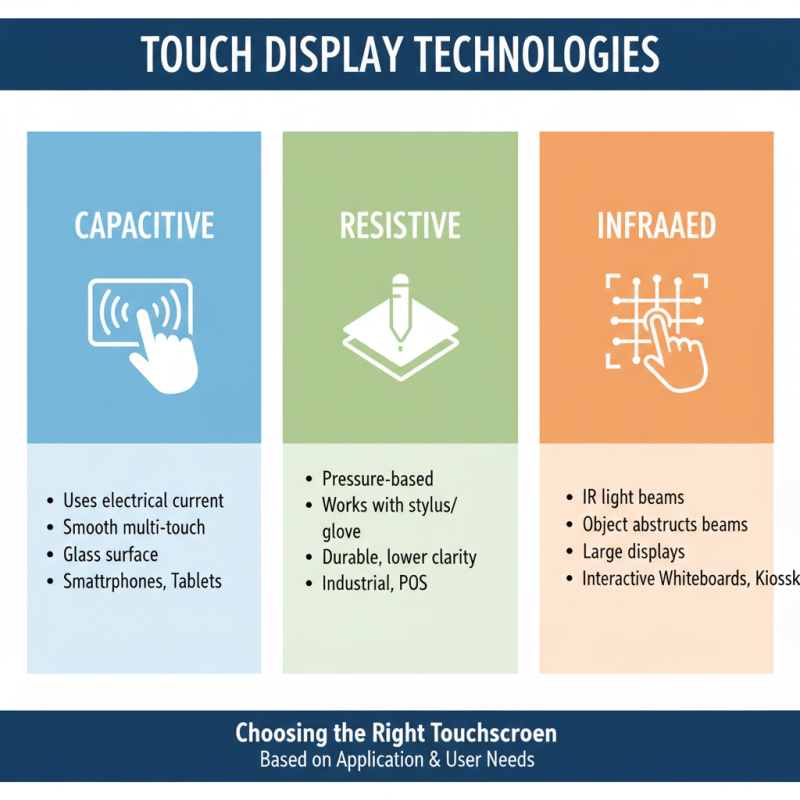
Touch display technologies have evolved significantly, offering various methods for detecting touch input. The most common types include capacitive, resistive, and infrared touch screens. Each technology has unique characteristics that cater to different applications and user needs.
Capacitive touch displays are the most prevalent in modern smartphones and tablets. They rely on the electrical properties of the human touch to detect input, allowing for multi-touch capabilities. This technology provides a smooth and responsive user experience, making it ideal for devices requiring gestures like pinch-to-zoom and swipe. Capacitive screens are usually made of glass, enhancing durability and clarity.
Resistive touch screens, on the other hand, consist of two flexible layers separated by a small gap. When pressure is applied to the surface, the layers make contact, registering the touch. This technology is often used in industrial applications and devices that require stylus input, as it works well with gloves and other objects. While resistive displays do not support multi-touch and are generally less responsive than capacitive screens, they are more cost-effective and can be used in a wider range of environments.
Infrared touch technologies employ an array of infrared light beams across the screen's surface. When an object interrupts the beams, the system registers a touch at the specific location. This technology is often found in large display solutions and interactive kiosks, as it allows for robust performance and supports multi-touch interactions. Infrared touch screens can also function with various input methods, enhancing their versatility in different settings.
How Touch Display Panels Function in Modern Devices
Touch display panels have become essential components in modern devices, allowing users to interact with technology intuitively. These panels primarily use capacitive or resistive technology to detect touch. Capacitive touch screens respond to the electrical properties of the human body, creating a connection when a finger touches the screen. In contrast, resistive screens rely on pressure applied to the surface, which can be effective even with a stylus or glove. By utilizing layers of conductive materials, these displays convert touch input into digital signals, enabling seamless interaction with software applications.
When using touch display panels, it's essential to understand their limitations and optimal care practices. For instance, while capacitive screens are highly responsive and support multi-touch functionalities, they can sometimes be affected by moisture or dirt. Keeping the screen clean not only enhances visibility but also improves responsiveness. Additionally, users should avoid using excessive pressure on resistive screens, as this can cause wear and tear over time.
Tip: Always use a microfiber cloth for cleaning your touch screen. This helps prevent scratches and keeps the display clear for optimal use. Also, consider using a screen protector to extend the lifespan of your device's panel, safeguarding it against daily wear and tear.
Applications of Touch Display Panels in Various Industries
Touch display panels have become integral to various industries, revolutionizing how users interact with technology. In healthcare, for instance, touch panels facilitate more efficient patient care through interactive medical devices that allow doctors to access patient records, diagnostic tools, and real-time data. This technology enhances communication between healthcare professionals and patients, making processes like scheduling, documentation, and treatment more streamlined.
In the retail sector, touch display panels are transforming the shopping experience. Interactive kiosks and digital signage equipped with touch technology engage customers by offering product information, personalized recommendations, and virtual try-ons. This not only enhances customer satisfaction but also increases sales opportunities as consumers can interact directly with the merchandise in an immersive manner. Additionally, in the automotive industry, touch displays in vehicles provide drivers with intuitive controls for navigation, entertainment, and climate management, significantly improving the driving experience through user-friendly interfaces.
Applications of Touch Display Panels in Various Industries
Future Trends in Touch Display Technology and Innovations
The future of touch display technology is poised for remarkable advancements as innovations continue to emerge. One significant trend is the development of flexible and foldable displays, which enable manufacturers to create devices that are not only lightweight but also adaptable to various form factors. This flexibility opens up new possibilities for designs, allowing for larger screens that can easily be compacted for portability. Additionally, the integration of advanced materials will enhance the durability and responsiveness of touch panels, providing a more seamless user experience.
Another promising direction is the integration of artificial intelligence (AI) with touch display technology. AI can enhance touch responsiveness and adapt the interface to individual user habits, creating a more personalized interaction. Moreover, innovations such as haptic feedback can provide users with tactile sensations that mimic physical buttons, bridging the gap between touchscreens and traditional interfaces. As these technologies evolve, we can expect touch displays to become increasingly intuitive, facilitating not just interaction but also richer, more immersive experiences across various applications, from mobile devices to smart home systems.