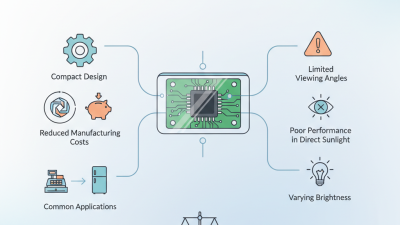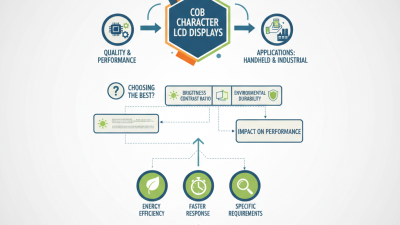
Finding the best COB Character LCD manufacturer in China depends on more than a low unit price. A COB module may look simple, yet its performance relies on the LCD glass, controller, backlight, PCB, and assembly quality working together. The right supplier should explain these choices clearly and support them with current specifications. Details matter.
For a fair comparison, check whether the manufacturer can provide the character format you need, such as 16x2 or 20x4, along with viewing-angle, operating-temperature, and interface information. Request samples and compare them under your actual lighting and operating conditions. Look closely at character contrast, backlight uniformity, connector fit, and response consistency. Ask how the company handles design changes, production inspection, and repeat orders. Clear answers are useful evidence; a polished brochure alone is not.
Price is easy to overvalue. A cheaper module can create extra costs if its dimensions, pinout, or display appearance differ between batches. I would still verify these details rather than relying on a verbal promise. No single factory is best for every project, and public information may not show how a supplier performs over time. This guide introduces practical criteria for assessing Chinese manufacturers, so buyers can shortlist candidates with fewer assumptions and better questions.
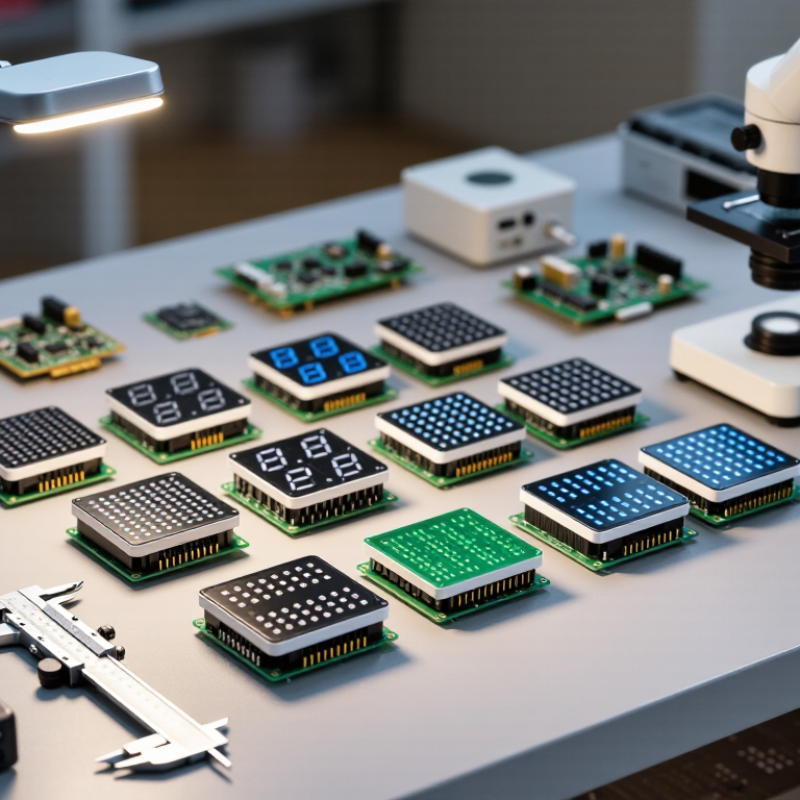
COB character LCDs show letters and numbers through a 5×8-dot character cell: five columns wide and eight pixels high. A 16×2 module offers 32 character positions, while a 20×4 module offers 80. Both use fixed rows and columns, so they suit menus, measurements, and status messages rather than detailed graphics. In many COB designs, the controller chip is mounted directly on the circuit board and protected with resin. The package can be compact. It still needs careful handling.
Choose 16×2 when panel space is tight and the display only needs a few short lines. A 20×4 layout can show several readings at once, such as temperature, pressure, and operating state. When evaluating a Chinese manufacturer, check the outline drawing, interface, supply voltage, backlight options, and operating-temperature range. Ask for a sample and test it with your intended controller. Datasheets help, but actual viewing angle and contrast may differ from expectations. That part is easy to overlook.
Tips: Confirm character height and pin spacing before designing the enclosure. Test the display under your real lighting conditions. Small differences matter.
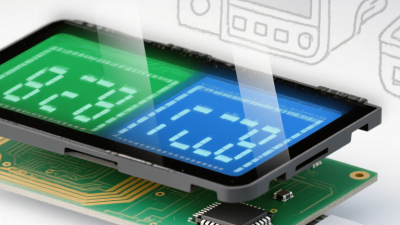
A COB character LCD is only as dependable as its controller and assembly. An HD44780-compatible design gives engineers a familiar instruction set, making initialization and display updates easier to verify. Its 80-character DDRAM stores characters separately from the visible screen. That distinction matters: a 16x2 module can use part of the memory while the remaining addresses support cursor movement or display shifts.
Check how the controller maps DDRAM addresses to the glass. On common 16x2 layouts, the two rows may not follow one continuous address sequence. A well-documented module should include its address map, timing limits, and interface details. During evaluation, send a short test pattern, move the cursor across both rows, and check for missing or repeated characters. Real tests catch more than a neat specification sheet. Even compatible controllers can differ slightly in startup behavior.
For a COB character LCD, display performance should be judged under the conditions it will actually face. Contrast can look strong on a dim workbench yet become difficult to read beside a sunlit window. Check the specified viewing direction, then compare samples at the intended backlight level. Small details matter. A slight change in viewing angle may make dark characters appear washed out.
Viewing angle is not just a number on a datasheet. Read the display from above, below, and from either side, especially if the unit will sit in a low control panel. Note where character strokes lose definition. Polarizer choice, display mode, and temperature can all affect the result, so compare models using the same lighting and test setup. This is easy to overlook.
Operating temperature deserves equally careful review. Check both the working range and any stated storage range, then ask how contrast and response change near the limits. A display used in a cold outdoor cabinet may respond more slowly; heat can also reduce readability. A brief room-temperature test cannot reveal everything. Record the test conditions and request relevant performance data from the manufacturer. Specifications help, but real samples may still vary slightly. That gap deserves attention.
A dependable COB character LCD supplier should make quality checks visible, not just describe them. Ask for the ISO 9001 certificate and confirm its scope, issuing body, and validity date. The certificate shows a managed quality system; it does not prove every display is defect-free. Small details matter. Request the inspection plan for incoming glass, PCB assemblies, and backlight parts.
RoHS compliance needs supporting records tied to the supplied part number. Look for material declarations or test reports with the sample identity and test date clearly stated. For critical projects, ask how X-ray fluorescence screening is used and when laboratory chemical analysis is required. Keep a copy with the purchase specification. A generic declaration is weak evidence if it cannot be linked to the shipped lot.
Test data should describe actual performance, not only pass marks. Review operating voltage, current, viewing angle, contrast, and character legibility under stated lighting. Ask for temperature-cycle and operating-life conditions, sample size, and failure criteria. Numbers help. Compare reports across production lots, then inspect a few modules for uneven characters, solder residue, or a loose connector. No factory report replaces incoming checks; that gap is easy to underestimate.
Use this checklist to evaluate a COB (Chip-on-Board) character LCD supplier. The criteria below describe standards, regulatory limits, and verification evidence; they are not claims about any specific factory or product. Product acceptance limits should be agreed in the drawing, datasheet, or purchase specification.
| Quality dimension | Applicable reference | What to check | Evidence or test data to request |
|---|---|---|---|
| Quality management system | ISO 9001:2015 | Check that the certificate is valid, covers the relevant manufacturing site, and includes an appropriate scope. ISO 9001 certifies a management system, not an individual LCD product. | Certificate number, certification body, scope, site address, issue and expiry dates; independently verify the certificate with its issuer or accreditation directory. |
| Restricted substances | EU RoHS Directive 2011/65/EU, as amended | For each restricted substance, the maximum concentration is 0.1% by weight in homogeneous material, except cadmium, which is limited to 0.01%. Applicable exemptions and product scope should be checked. | Current declaration of conformity and material-specific test reports. Reports should identify the tested material, method, laboratory, date, and measured result. |
| RoHS substance coverage | RoHS restricted-substance list | Check lead, mercury, cadmium, hexavalent chromium, PBB, PBDE, DEHP, BBP, DBP, and DIBP, subject to the directive’s scope and exemptions. | A substance-by-substance report or a documented material assessment covering the LCD glass, polarizers, PCB, solder, cable, connector, and other applicable homogeneous materials. |
| Incoming material control | Supplier-defined inspection plan and approved product specification | Confirm incoming materials and components are traceable and checked against approved specifications before production. | Incoming inspection records, material or lot identification, supplier declarations, and nonconformance disposition records. |
| LCD dimensions and construction | Customer-approved drawing and datasheet | Verify module outline, viewing area, character size, mounting features, connector or pin assignment, and PCB dimensions against the approved revision. | Recorded measurements, drawing revision, inspection method, sample size, and pass/fail results against specified tolerances. |
| Electrical and functional test | Product datasheet and customer-approved test specification | Check supply voltage, current, interface operation, character patterns, contrast adjustment, and backlight operation under the specified test conditions. | Test conditions and measured values, including supply voltage, current, displayed test pattern, backlight current, instrument identification, and pass/fail result. |
| Display appearance | Approved appearance standard and product specification | Inspect for visible defects such as scratches, contamination, uneven illumination, missing segments, or abnormal character display using agreed viewing and lighting conditions. | Inspection criteria, viewing conditions, defect classification, sample size, and inspection records. Define allowable limits in the purchase specification. |
| Environmental and reliability testing | Customer-approved test plan; relevant IEC 60068 methods where specified | Temperature, humidity, vibration, or other environmental tests must use agreed test conditions, duration, sample count, and post-test acceptance criteria. There is no single universal pass limit for every LCD module. | Test method and revision, chamber conditions, duration, sample identification, before-and-after results, and recorded failures. |
| Electrostatic discharge (ESD) | IEC 61000-4-2 when required by the product-level test plan | Discharge levels, test points, coupling method, and pass criteria depend on the end product and agreed test plan; the standard does not set one universal requirement for every LCD module. | Test level, contact or air discharge method, number of discharges, test points, equipment details, and functional results before and after testing. |
| Production traceability and final inspection | Factory control plan and customer requirements | Confirm that finished units can be linked to production lots and that final inspection follows documented acceptance criteria. | Lot or date-code records, final inspection report, test equipment calibration status, defect and rework records, and shipment inspection results. |
When evaluating a China-based COB character LCD manufacturer, ask for the MOQ by configuration, not just a headline figure. A standard 16×2 module may have a different minimum from one with a custom character set, connector, or backlight. Request separate quotes for samples, pilot runs, and repeat orders. The WSTS Fall 2024 Semiconductor Market Forecast projected global semiconductor sales of $697 billion in 2025, an 11.2% annual increase. That is not proof of an LCD shortage, but it makes controller and component availability worth checking. Ask suppliers to identify any parts with long replenishment times.
Lead time should distinguish sample approval, materials procurement, production, and shipping. Get each stage in writing, along with the date that starts the clock. For customization, provide a drawing specifying character layout, viewing angle, operating temperature, and backlight color; then confirm these details on a physical sample. Small changes matter. A connector moved by a few millimeters can disrupt an enclosure. Request test records for contrast and display operation, plus a clear process for handling defects. Support also matters after delivery: ask who answers technical questions and how quickly replacement samples can be provided. One imperfect point: a low MOQ can still mean a higher unit cost, and the cheapest quote may omit tooling or inspection fees. Compare the full cost, not just the first line.