Leave Your Message

Name*

Phone number*

Email Address*

Country*

Message*

Annual Quantity*

Application*

Best 10 Oled Touch Screen Innovations You Need to Know?

In recent years, the Oled Touch Screen technology has surged, shaping how consumers interact with devices. According to a report by Grand View Research, the global OLED market is expected to reach $39.4 billion by 2025, demonstrating a robust growth trajectory. This innovation not only enhances display quality but also improves user experience significantly.

Dr. David Chang, an industry expert, stated, “Oled Touch Screens represent a pivotal leap in touch technology.” This technology's unique characteristics, such as vibrant colors and energy efficiency, make it ideal for smartphones, tablets, and smart appliances. However, challenges remain. For instance, the high production costs can affect widespread adoption. Furthermore, durability under various conditions has been a critical point of discussion.

The landscape of Oled Touch Screen innovation is not without its flaws. As companies push for advancements, the environmental impact of production processes cannot be overlooked. The need for sustainable practices is vital. In this competitive field, balancing performance, cost, and sustainability is crucial for future advancements.
Best 10 Oled Touch Screen Innovations You Need to Know?

Top OLED Touch Screen Innovations Revolutionizing User Experience

OLED touch screen innovations are transforming how we interact with devices. These screens offer vibrant colors and deep contrasts, enhancing visual experiences. The touch sensitivity is now more precise, allowing for seamless navigation. This technology is not just for smartphones; it is making waves in tablets, TVs, and even automotive displays.

One notable shift is the reduction of latency in touch responses. Users experience instant feedback, making interactions feel more natural. Despite these advancements, challenges remain. Manufacturing costs can be high, which impacts affordability for some consumers. Additionally, durability issues sometimes arise, questioning the longevity of these innovative screens. Balancing quality and cost is essential for broader adoption.

Another exciting development is flexible OLED screens. They can bend and curve, opening new possibilities. This feature is reshaping device designs, from foldable phones to curved monitors. Yet, the practicality of such designs needs examination. Are they as sturdy as traditional options? Users need to weigh aesthetics against functionality. Each innovation offers promise, but real-world applications must match expectations.

Key Technical Advancements Enhancing OLED Touch Screen Performance

The advancement of OLED touch screen technology has transformed user experiences in many devices. Key technical improvements are boosting performance significantly. A recent report indicated that OLED displays can achieve a 1,000,000:1 contrast ratio, enhancing clarity and vibrancy. This capability is noteworthy for applications demanding rich visuals, such as gaming and streaming.

Another innovation is in touch sensitivity. Modern OLED screens can detect multiple touch points accurately. Reports show these screens can register touches within milliseconds, making interactions more fluid. However, there are challenges. Not all applications leverage this sensitivity effectively. Many users still encounter latency issues during fast-paced tasks.

Energy efficiency is also a crucial factor. OLED screens consume less power when displaying darker images. According to research, power consumption can drop by up to 30% compared to traditional screens. Yet, this improvement does not eliminate concerns about screen burn-in. Users need to consider this issue seriously while enjoying the vibrant displays. These advancements are impressive but provoke thoughts on sustainability and long-term usability.

Best 10 Oled Touch Screen Innovations You Need to Know? - Key Technical Advancements Enhancing OLED Touch Screen Performance

Innovation Description Key Benefits Impact on Performance
Flexible OLEDs OLEDs that can bend and conform to different shapes. Enhanced design versatility, lighter devices. Allows for innovative form factors and screen integration.
Transparent Displays Displays that can show images while remaining see-through. Unique customer experiences and applications in retail. Enables new interaction paradigms with the environment.
Higher Refresh Rates Improvements in the frequency at which images refresh on the screen. Smoother visuals, better gaming experiences. Enhances real-time responsiveness and reduces motion blur.
Eco-Friendly Materials Use of sustainable and recyclable materials in production. Reduced environmental impact. Attracts environmentally conscious consumers.
Touch Sensitivity Improvements Enhanced touch sensor technology for better responsiveness. More accurate touch detection and multi-touch capabilities. Improves user experience in applications and gameplay.
Low Power Consumption Technologies to reduce the energy required to operate displays. Longer battery life for portable devices. Enhances device usability and market appeal.
Color Accuracy Enhancements Advancements to ensure more precise color reproduction. Better visual quality for media and content creation. Critical for professionals relying on accurate visuals.
Active-Matrix Technology Increases the speed of pixel refresh and image load. Better performance in dynamic scenes. Significantly enhances viewing experience during action content.
Improved Durability Stronger materials that resist scratches and impact. Longer lifespan of the devices. Decreases replacement costs and increases reliability.
Mini LED Backlighting Integration of mini LEDs for improved brightness and contrast. Stunning visuals with deeper blacks and brighter colors. Enhances overall viewing experience in bright and dark environments.

Market Trends: Growth and Adoption Rates of OLED Technology in 2023

The OLED market is witnessing remarkable growth in 2023. Recent reports indicate that the global OLED market is projected to reach $45 billion by the end of this year. This marks a significant increase from $30 billion in 2021. Several factors are driving this adoption. Enhanced display quality, energy efficiency, and advancements in touch technology are all key contributors.

As manufacturers focus on optimizing production methods, the availability of OLED displays is expanding. Touch-enabled OLEDs are being implemented across various sectors, including automotive, portable devices, and home electronics. The market for OLED touch screens is expected to grow at a compound annual growth rate (CAGR) of 15% through 2025. However, despite this surge, challenges remain. Some manufacturers still face production hurdles and higher costs. The complexities associated with scaling production can hinder further adoption.

Consumer demand is consistently increasing, yet not without its challenges. A study highlights that over 60% of potential users express concern about durability. Issues with screen longevity and susceptibility to burn-in are still prevalent. Addressing these concerns is crucial for the future trajectory of OLED technology. This innovation demands constant evaluation and improvement to ensure further integration into everyday life.

Comparative Analysis of OLED vs. LCD Touch Screen Technologies

Best 10 Oled Touch Screen Innovations You Need to Know?

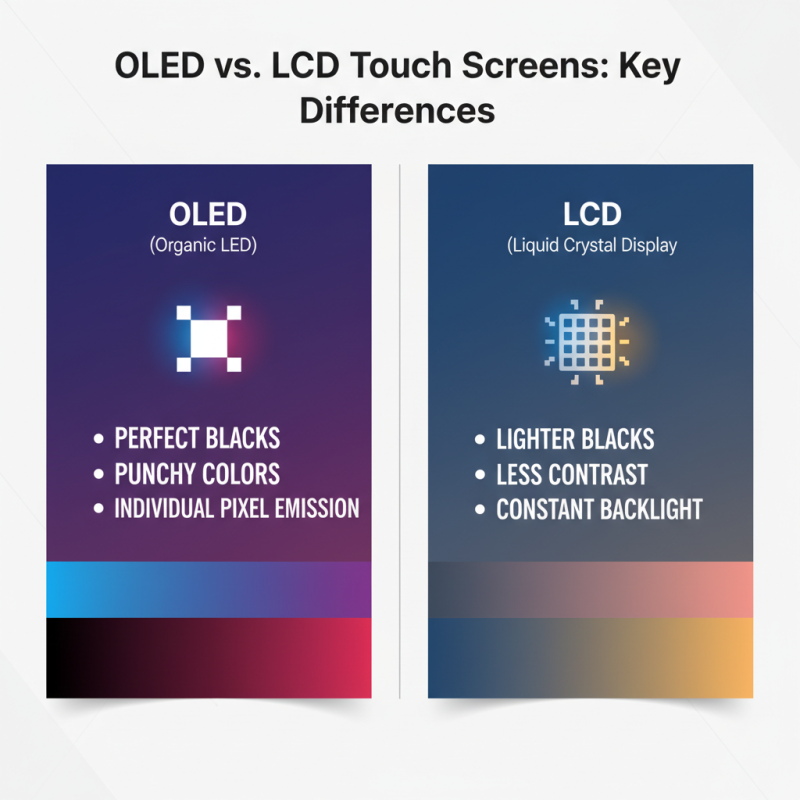
When comparing OLED and LCD touch screen technologies, it’s essential to look at several key aspects. OLED screens deliver vibrant colors and deep blacks. This is due to how they emit light individually from each pixel. In contrast, LCDs rely on backlighting, which may result in lighter blacks and less contrast overall. This fundamental difference changes the way images are viewed and perceived.

Another important factor is energy consumption. OLEDs can be more efficient when displaying darker images, as inactive pixels consume no power. LCDs consistently use power regardless of the image brightness. However, OLED’s longevity can be a concern. Burn-in effects can occur, especially with static images. Many users may overlook this issue when prioritizing display quality.

The response time is generally faster in OLED screens. This leads to a smoother interaction experience, particularly in fast-paced applications. However, prices remain a critical disadvantage for OLED technology. They tend to cost more to produce, which can affect consumer choices. Both technologies have their strengths and weaknesses, making it essential to evaluate personal needs before deciding.

Impact of OLED on Industries: Consumer Electronics to Automotive Applications

Best 10 Oled Touch Screen Innovations You Need to Know?

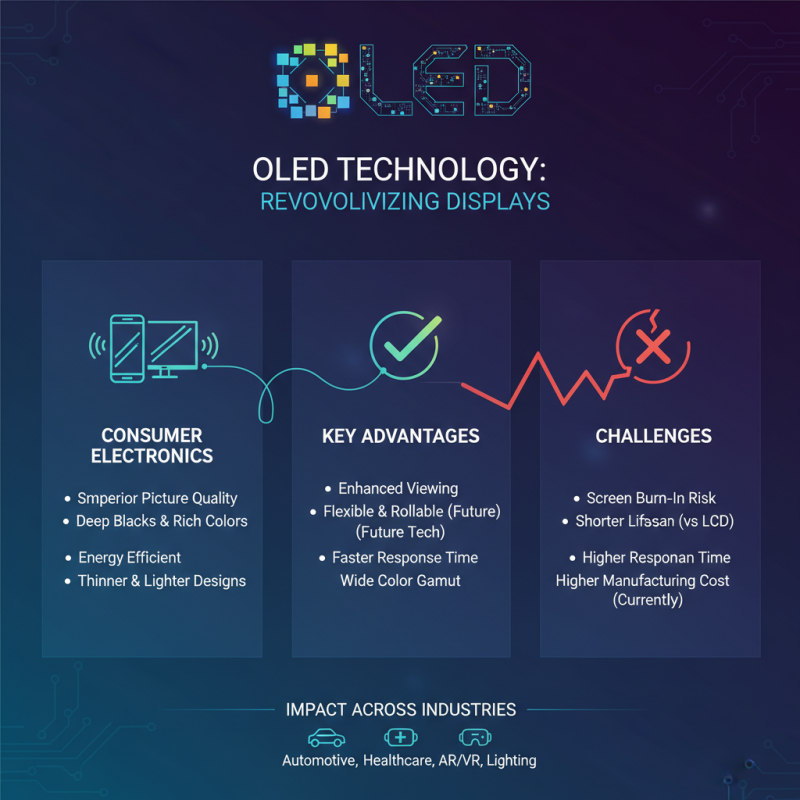
OLED technology has made significant impacts across various industries. In consumer electronics, the vibrant colors and deep blacks of OLED screens enhance the viewing experience. Whether it’s a smartphone or a television, users enjoy better energy efficiency and impressive picture quality. These displays are lighter and thinner, allowing for sleek designs that capture attention. However, issues like screen burn-in and shorter lifespans present challenges.

In the automotive sector, OLED displays are revolutionizing dashboards and infotainment systems. They provide drivers with vital information in an elegant format. Customization options allow for personalized interfaces, improving user interaction. Yet, integrating such technology can be costly and complex, raising questions about long-term reliability. Automotive manufacturers must address these concerns to truly elevate the driving experience. As industries evolve, refining OLED technology will be crucial for future innovations.