Top 10 Tips for Choosing E Paper Display vs LCD Display Modules?
E Paper Display and LCD Display Modules each offer unique benefits. Understanding their differences is crucial for making informed choices. According to a recent report by Grand View Research, the global e-paper market is expected to reach $8.6 billion by 2025. This highlights a growing interest in E Paper Display technology, especially for applications requiring low power consumption and excellent readability in sunlight.
LCDs, on the other hand, dominate the display market, with a projected value of $119 billion by 2026, as noted by Fortune Business Insights. Their vibrant colors and high refresh rates make them ideal for dynamic content. However, they consume more power, which can be a drawback in battery-operated devices.
Choosing between E Paper Display and LCD Display Modules depends on various factors. Consider your application's specific requirements. Do you need low power consumption? Or is visual quality your priority? Each module has its strengths and weaknesses. A thoughtful analysis is necessary to arrive at an optimal solution.
Consider the Application Requirements for Display Modules
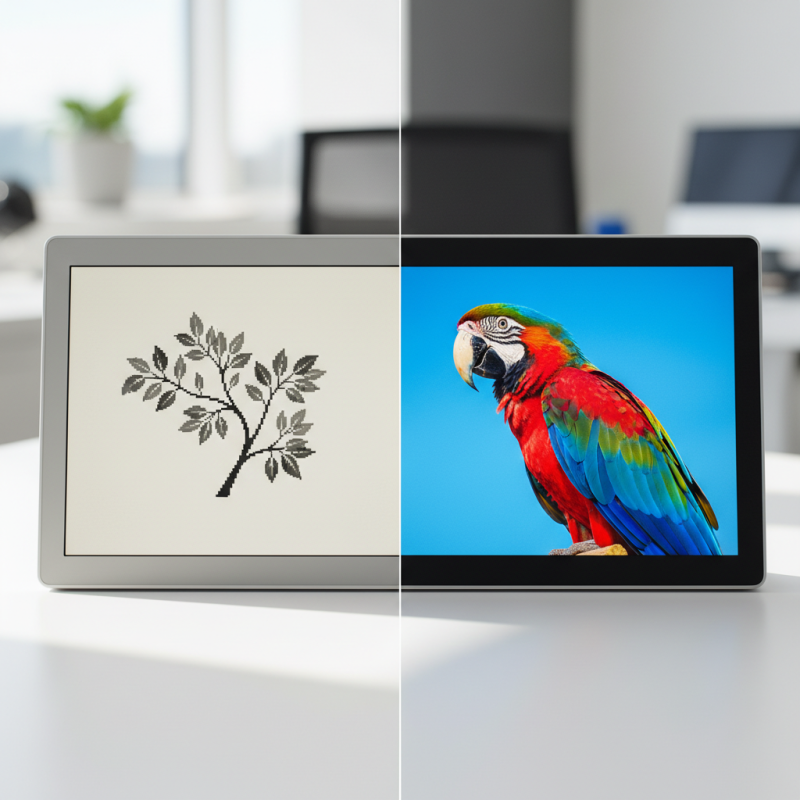
When selecting between an E-paper display and an LCD display module, consider the specific application requirements. E-paper displays excel in low-power situations. They remain visible in bright light, making them ideal for outdoor applications. Think of e-readers or digital signage that needs to be viewed under direct sunlight.
On the other hand, LCD displays offer vibrant colors and fast refresh rates. They are suited for applications requiring dynamic content. Real-time data or video is best displayed with LCD technology. However, they consume more power compared to E-paper displays. Assessing the power source is crucial for mobile or remote applications.
Durability is another aspect to ponder. E-paper displays can withstand harsh conditions, but they can be fragile. LCDs, while more robust, may suffer from screen burn-in. Evaluate your environment; whether it’s a bustling factory floor or a quiet library can influence the display choice significantly. Balancing these factors is essential to make the right decision for your unique needs.
Comparison of E-Paper Display vs LCD Display Modules
Evaluate Power Consumption and Efficiency of E-Paper vs LCD
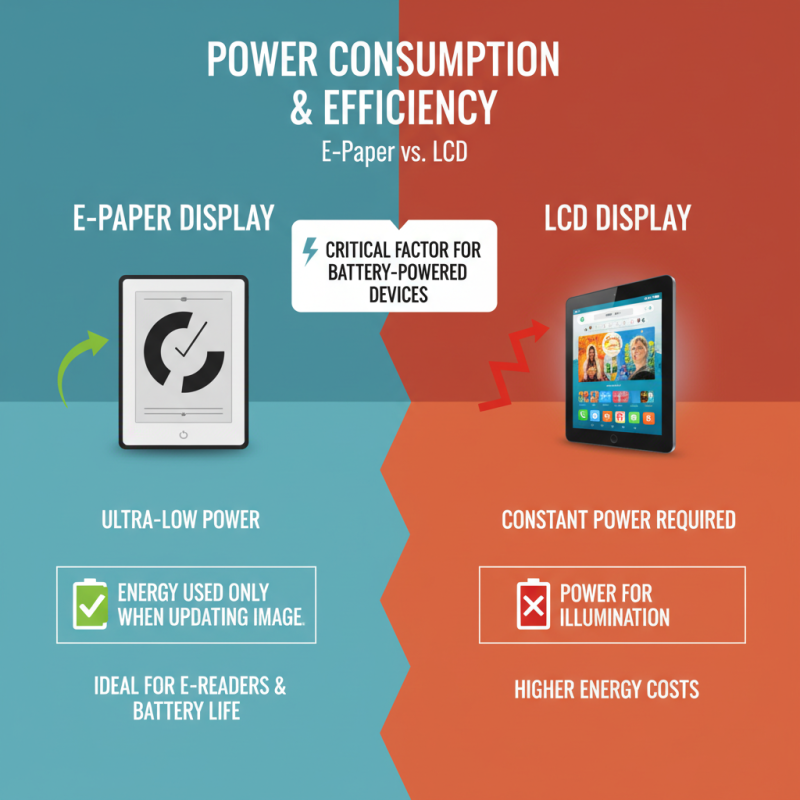
When deciding between e-paper and LCD displays, power consumption is a critical factor. E-paper displays are known for their ultra-low power usage. They only consume energy when updating the image. In contrast, LCD displays require a constant power supply for illumination, leading to higher energy costs in the long run. This difference is vital for devices like e-readers, where battery life is essential.
Consider your application. If it’s lightweight and portable, e-paper is often the best choice. It offers excellent readability in bright light due to its reflective nature. On the other hand, if you're developing a device that requires high refresh rates, LCD may be more suitable.
When assessing efficiency, contemplate where your devices will be used. E-paper shines in outdoor environments, while LCDs excel in dynamic indoor settings. Both technologies have their merits, and determining your needs is crucial. Evaluate these points carefully to make an informed decision.
Assess Visibility and Readability in Different Lighting Conditions
When evaluating display technologies, visibility and readability in different lighting conditions are critical factors. E Paper displays excel in outdoor environments. Their reflective surfaces mimic printed paper, making them easy on the eyes even under direct sunlight. Industry studies indicate that E Paper displays can reduce glare by up to 90%. This characteristic makes them ideal for applications like e-readers and outdoor signage.
In contrast, LCD displays struggle in bright conditions. They often require backlighting, which can amplify glare and reduce contrast. Research has shown that visibility decreases significantly under bright light. For instance, a report highlighted that LCD readability drops by 30% outdoors compared to E Paper displays. Furthermore, user fatigue can increase due to harsh lighting conditions, which can lead to a less enjoyable experience.
It's also essential to consider varying indoor lighting. In dim environments, LCD displays typically shine with vibrant colors and better resolution. But they can appear washed out next to E Paper in environments with mixed lighting. Both technologies have strengths and weaknesses that must be carefully weighed against specific use cases.
Top 10 Tips for Choosing E Paper Display vs LCD Display Modules
| Criteria |
E-Paper Display |
LCD Display |
| Visibility in Sunlight |
Excellent |
Fair |
| Power Consumption |
Very Low |
Higher |
| Refresh Rate |
Slow |
Fast |
| Viewing Angles |
Wide |
Narrow |
| Color Depth |
Limited |
Full Color |
| Thickness |
Thin |
Thicker |
| Cost |
Moderate |
Low |
| Durability |
Very Durable |
Moderately Durable |
| Use Case |
Ideal for Static Displays |
Best for Dynamic Content |
| Technology Maturity |
Emerging |
Established |
Compare Refresh Rates and Response Times of Display Technologies
When comparing e-paper displays and LCD display modules, refresh rates and response times play crucial roles. E-paper displays, known for their low power consumption, often have slower refresh rates. This makes them ideal for static images and applications like e-readers. However, they struggle with fast-moving video content.
In contrast, LCD displays boast much faster refresh rates, making them suitable for dynamic content. Their quicker response times enable smoother visuals and better overall performance in gaming and video playback. Yet, they consume more power. A user might prefer e-paper for reading but might opt for LCD for gaming.
Choosing the right display technology isn't straightforward. One must consider the intended application's needs alongside the technical specifications. Balancing performance with energy efficiency is often a tricky equation. The user should reflect on their priorities before making a decision.
Analyze Cost and Availability of E-Paper and LCD Display Modules
When choosing between e-paper and LCD display modules, cost and availability are crucial. E-paper displays are often less expensive than high-quality LCDs. However, their production may be limited. This can lead to longer lead times, especially in bulk orders. On the other hand, LCD displays have widespread availability. You can find them in various sizes and resolutions. This accessibility often ensures faster delivery for projects.
E-paper technology shines in low-power applications. It consumes minimal energy, making it ideal for devices needing long battery life. However, the initial cost of specialized e-paper modules may still be higher than basic LCD options. Additionally, if your project requires vibrant colors or fast refresh rates, LCDs may be more suitable. Yet, this comes with a trade-off in terms of power consumption and outdoor visibility. Analyzing these factors will help you make a more informed decision. Reflecting on specific project needs can reveal which display type truly matches your requirements.