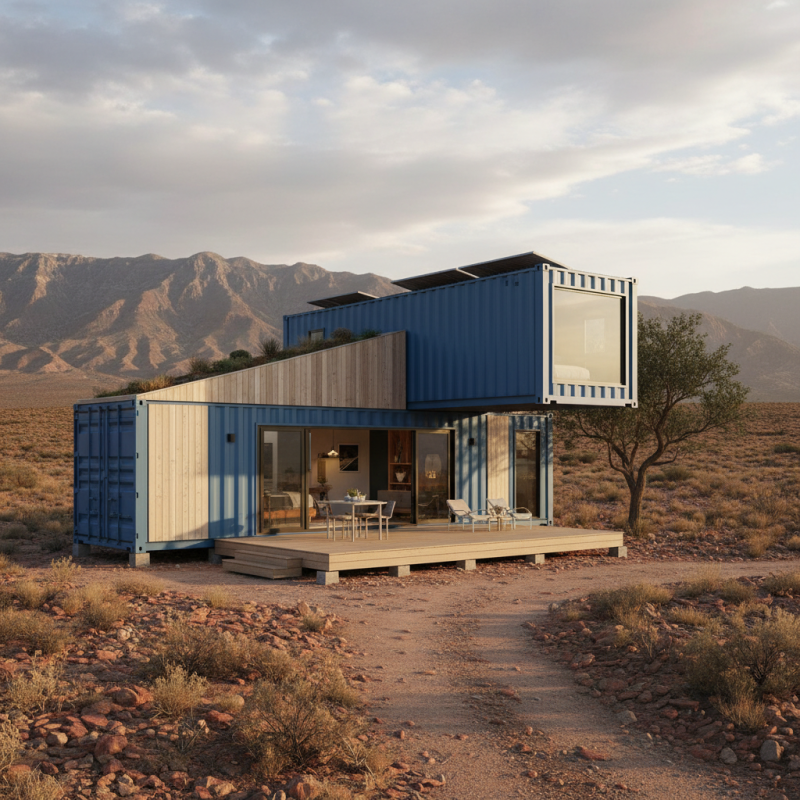
What is a Prefab Container House and How Does It Work?
A Prefab Container House is an innovative housing solution. It utilizes repurposed shipping containers to create functional living spaces. This concept is gaining popularity for its sustainability and cost-effectiveness.
These homes are designed for efficiency. They are built off-site and delivered to their final location. This process reduces construction time significantly. However, it may not offer the same customization as traditional homes. Buyers often face limitations in terms of design and layout.
Prefab Container Houses can be a great choice for many. They are eco-friendly and can be set up quickly. Yet, some may find them less suitable in extreme climates. Understanding the advantages and challenges is essential for potential homeowners.
What is a Prefab Container House?
A prefab container house is a unique living option. It is made from old shipping containers. These containers are often repurposed into homes. This approach promotes sustainability. It can be cost-effective and eco-friendly.
The design of a prefab container house can vary widely. Some are simple, while others are quite elaborate. You can customize layouts, windows, and interiors. However, not every design fits neatly into every environment. There may be zoning regulations to consider. Also, some areas have stricter building codes.
**Tips:** When considering this option, check local guidelines. Think about insulation and weatherproofing. These factors are crucial for comfort. Additionally, remember that space can feel limited. You might need to rethink furniture size and layout. Embrace the challenge; it can lead to innovative solutions.
Benefits of Living in a Prefab Container House
Prefab container houses are gaining popularity for their unique design and benefits. One of the main advantages is affordability. These homes are often cheaper than traditional houses. They can be built quickly, saving both time and labor costs. This makes them an attractive option for many.
Living in a prefab container house offers flexibility. They can be placed almost anywhere, from urban areas to rural landscapes. Their compact size reduces the amount of land needed while still providing essential living space. A well-designed container home can feel open and spacious.
Tips: Consider insulation carefully. Proper insulation keeps the house cozy in winter and cool in summer. Pay attention to layout. A clever layout maximizes space and functionality. It’s important to think about local regulations. Some areas may have specific requirements for container homes.
Benefits of Living in a Prefab Container House
How Prefab Container Houses Are Constructed
Prefab container houses are becoming more popular for their quick and efficient construction. These homes are built using repurposed shipping containers. The process is often faster than traditional building methods. According to a recent industry report, prefab homes can be assembled in about 30% less time compared to standard houses.
Constructing a prefab container house involves several key steps. First, a design is created based on customer needs and site conditions. Next, containers are modified to include windows, doors, and insulation. This customization is crucial for making the space livable. Once modified, the containers are transported to the site. They are then assembled using cranes and other equipment.
Despite the efficiency, there are challenges to consider. Sourcing high-quality containers can take time. Not all containers are suitable for conversion. Some may show signs of wear or damage. This can complicate the construction process. Additionally, the design options can be limited compared to traditional homes. Builders must creatively use available space. These factors highlight the importance of careful planning and selection in the prefab container home journey.
Key Features of Prefab Container Houses
Prefab container houses have gained popularity for their unique characteristics and functional design. They are made from repurposed shipping containers, which offer a sustainable solution to housing. These structures are often modular, allowing for various configurations and layouts. Customization is also possible, with options for insulation, windows, and finishes. This flexibility meets diverse needs, from single-family homes to multi-unit complexes.
One key feature is their portability. Container houses can be relocated with relative ease, which can be advantageous in certain situations. Additionally, they tend to be more cost-effective than traditional homes. However, the quality of insulation and ventilation can sometimes leave much to be desired. This can lead to issues with temperature control and moisture buildup. Potential owners should assess these factors carefully.
Another aspect to consider is the environmental impact. While repurposing containers is eco-friendly, building codes and zoning regulations can complicate matters. Buyers must navigate these complexities, often requiring research and patience. Balancing the advantages of prefab container houses with these challenges is essential for a successful living experience.
Applications and Uses of Prefab Container Houses
Prefab container houses are versatile structures that find applications in various fields. They are often used in residential settings, offering affordable housing solutions. Many people appreciate their quick assembly and customization options. For example, a family may choose a container house for a vacation getaway. It can be placed in scenic locations, providing breathtaking views.
These structures have also gained popularity in commercial sectors. Businesses often use them as pop-up shops or office spaces. They can be set up quickly, making them ideal for temporary projects. Some companies convert containers into cafes or retail spaces. This approach can save costs while adding a unique aesthetic to their brand.
However, it's important to consider some challenges. Not all containers are well-insulated, which may affect comfort levels. Additionally, zoning laws sometimes restrict their use in certain areas. Buyers should research local regulations carefully. Reflecting on these factors can lead to better decision-making for potential owners.