What is a Display Panel LCD? Understanding Its Types and Uses Explained
The Display Panel LCD industry has experienced significant growth in recent years, driven by increasing consumer demand for high-resolution screens in various devices. According to a report by MarketsandMarkets, the global LCD display market size is projected to reach USD 151.23 billion by 2025, growing at a CAGR of 6.2% from 2020. This growth can be attributed to the rising adoption of LCD panels in sectors such as consumer electronics, automotive, and visualization technologies.
Industry expert Dr. Emily Chen, a leading figure in display technology research, emphasizes the importance of understanding the different types and applications of Display Panel LCDs. She states, “The versatility of LCD technology has revolutionized our interaction with digital media, allowing for clearer, brighter, and more efficient displays.” As more industries embrace LCD technology, it becomes crucial to dissect the various types of display panels and their respective uses, ensuring businesses and consumers can make informed choices.
This introduction sets the stage for a comprehensive look at Display Panel LCDs, detailing their types, innovations, and extensive applications across various fields. Understanding these aspects is essential for anyone looking to navigate the complex landscape of display technologies.

What is a Display Panel LCD?
Liquid Crystal Display (LCD) panels have revolutionized the way we consume visual media, thanks to their ability to provide crisp images and vibrant colors. An LCD works by using liquid crystals sandwiched between two layers of glass or plastic, which manipulate light to create images. According to a report by MarketsandMarkets, the global LCD market size was valued at approximately $109 billion in 2022 and is projected to reach $150 billion by 2027, driven by increasing demand across various sectors including consumer electronics and automotive displays.
LCD panels can be categorized into several types, including Twisted Nematic (TN), In-Plane Switching (IPS), and Vertical Alignment (VA). TN panels are well-known for their fast response times, making them suitable for gaming, while IPS panels offer superior color reproduction and wider viewing angles, ideal for graphic design tasks. VA panels strike a balance between these two, providing better contrast ratios. As of 2023, IPS technology accounts for over 30% of the total display market share, underscoring its popularity in visual media.
Tips: When choosing an LCD panel, consider its intended application. For gaming, look for low response times and high refresh rates. If color accuracy is paramount, opt for IPS panels. Lastly, always check the panel’s contrast ratio, as it significantly influences picture quality, particularly in darker environments.
What is a Display Panel LCD? Understanding Its Types and Uses Explained
| Type |
Resolution |
Common Uses |
Pros |
Cons |
| TFT LCD |
1920x1080 |
Monitors, TVs |
Good color reproduction |
Limited viewing angles |
| IPS LCD |
2560x1440 |
Smartphones, Tablets |
Wide viewing angles |
Higher cost |
| VA LCD |
3840x2160 |
TVs, Gaming Monitors |
Excellent contrast ratio |
Response time can be slower |
| OLED LCD |
3840x2160 |
High-end TVs, Smartphones |
Deep blacks and vibrant colors |
Risk of burn-in |
Types of LCD Technology: An Overview
Liquid Crystal Display (LCD) technology has revolutionized the way we view images and interact with screens. Its ability to produce clear and vibrant visuals has led to various types tailored for specific applications.
Primarily, there are two main categories of LCD technology: Twisted Nematic (TN) and In-Plane Switching (IPS).
TN panels are known for their rapid response times and affordability, making them a popular choice for gaming monitors and entry-level displays. Despite their advantages, TN panels are often criticized for their limited color accuracy and narrower viewing angles.
On the other hand, IPS panels deliver superior color reproduction and wider viewing angles, which makes them ideal for professional work such as graphic design and photo editing. Their ability to maintain consistent colors from different perspectives is a significant advantage for users requiring precise visuals.
Another notable type is the Vertical Alignment (VA) panel, which strikes a balance between TN and IPS technologies. VA panels offer better contrast ratios and depth of color, making them suitable for watching movies and general multimedia consumption. Understanding these types of LCD technology is essential for consumers to make informed choices based on their specific needs and usage scenarios, whether for entertainment, productivity, or professional applications.
Common Applications of LCD Display Panels
LCD display panels are ubiquitous in today's technology landscape, serving a variety of applications across different industries. Commonly found in televisions, computer monitors, smartphones, and tablets, LCD panels provide sharp images and efficient energy consumption, making them a preferred choice for many devices. Beyond personal electronics, they are utilized in industrial machines, medical equipment, and automotive displays, showcasing their versatility and broad utility.
When considering an LCD display panel for a specific application, it’s essential to evaluate factors like screen size, resolution, and viewing angles. For instance, large LCD panels are suitable for public displays or signage, while smaller screens are ideal for handheld devices.
Tips: Before purchasing, measure the space where the display will be installed to ensure it fits properly. Additionally, consider the lighting conditions of the environment; certain panels perform better in bright settings than others. Choosing the right type for your needs can enhance user experience and functionality.
Advantages and Disadvantages of LCD Displays
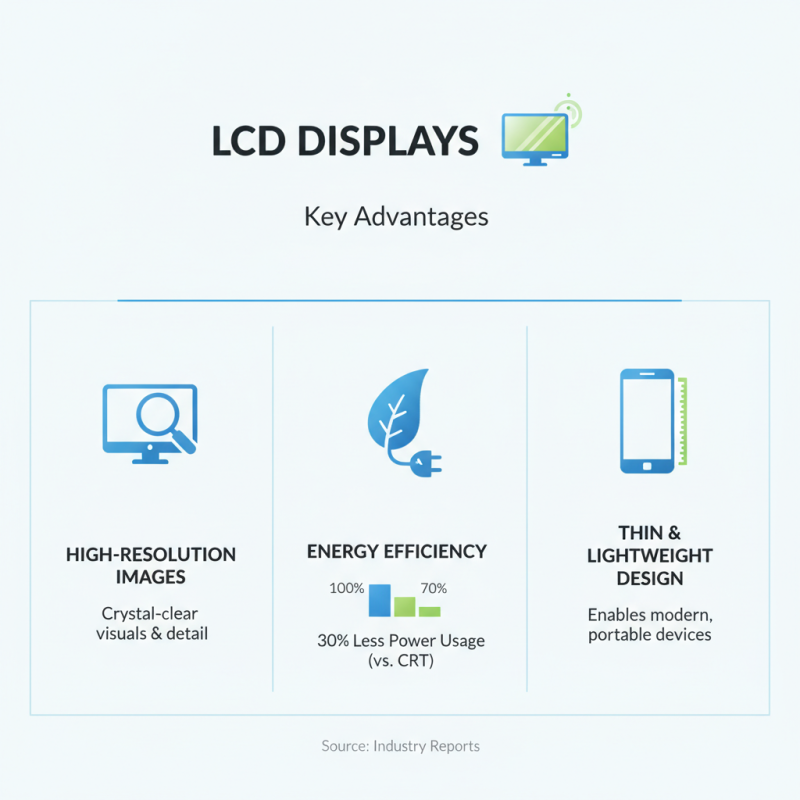
LCD displays, or Liquid Crystal Displays, are widespread in various applications, from televisions to smartphones. They offer notable advantages, particularly in their ability to provide high-resolution images and energy efficiency. According to industry reports, LCD screens typically consume 30% less power compared to traditional CRT displays, making them favorable for extended use in devices. Additionally, the lightweight nature of LCDs allows for thinner designs, paving the way for sleek aesthetics in modern devices.
However, LCD technology also has its disadvantages. One major drawback is the limited viewing angles many LCD panels offer; colors and brightness can shift significantly when viewed from different angles. A study by the Society for Information Display highlights that while advancements have been made, most standard LCDs still struggle with off-axis performance compared to OLED alternatives. Furthermore, LCDs may not deliver the same level of contrast, particularly in dark scenes, due to their reliance on backlighting. As such, while the benefits of LCD technology are substantial, potential drawbacks must be considered when choosing display solutions for various uses.
Future Trends in LCD Display Technology
The future trends in LCD display technology are poised to reshape the landscape of visual displays significantly. As the demand for higher resolution and increased energy efficiency rises, the LCD industry is advancing toward more sophisticated technologies, such as Mini-LED and MicroLED. According to a report by the Global LCD Markets, the market for Mini-LED backlit LCD panels is expected to reach approximately $12.5 billion by 2025, indicating robust growth driven by adoption in televisions and gaming monitors. This transition promises not only improved contrast ratios and color reproduction but also a movement towards thinner and lighter display panels that enhance user experience.
Another significant trend is the integration of OLED-like features in LCD displays. With advancements in technologies like quantum dot displays, manufacturers are pushing the boundaries of traditional LCD capabilities, allowing for better color accuracy and brightness. A recent study by the International Display Research predicts that by 2026, quantum dot LCDs could capture over 30% of the premium display market, as consumers seek enhanced viewing experiences without the prohibitive costs associated with OLED technologies. These innovations reflect an ongoing commitment to improving display performance while addressing varied consumer needs across industries, from entertainment to professional applications.
Types of LCD Display Panels and Their Market Share (2023)