What is Circular LCD Screens and How Do They Work?
Circular LCD Screens have emerged as a fascinating innovation in display technology. These screens aren’t just round; they offer a unique visual experience. People are drawn to their sleek design and vibrant colors. Unlike traditional displays, Circular LCD Screens can be used in various applications, from smartwatches to modern advertising.
Understanding how Circular LCD Screens work is essential. They utilize liquid crystal technology to create images. The circular shape enhances the design and layout possibilities. Such screens can attract attention in crowded environments. However, these displays can have limitations, such as resolution challenges.
As the technology advances, some issues may improve, but not all problems have clear solutions. Viewing angles may vary, impacting user experience. Circular LCD Screens offer potential, yet they also pose questions about functionality and practicality. As we explore their applications, we must consider these complexities.
What Are Circular LCD Screens and Their Key Features?
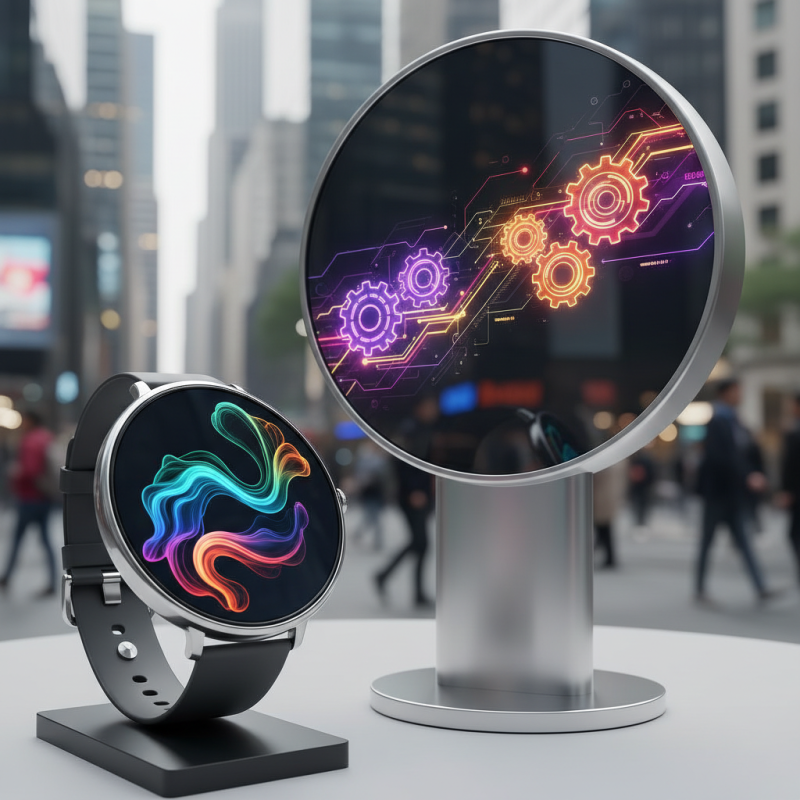
Circular LCD screens have gained attention for their unique design and functionality. Unlike traditional rectangular displays, these screens boast a round shape that can enhance the visual appeal of various devices. Their distinct form allows for innovative applications in areas like smartwatches, automotive displays, and home decor. These screens can provide a new way to present information, creating an immersive experience for users.
One of the key features of circular LCD screens is their ability to create engaging visuals. The shape can showcase notifications, time, or even images in an eye-catching manner. However, integrating these screens into existing products may present challenges. The unconventional design can require custom software solutions and hardware adjustments. Moreover, not all users may find a circular display practical. The space needed for content layout may become a concern, potentially limiting usability.
Another aspect to consider is the viewing angle. Circular designs might not always offer the best visual clarity. Depending on the placement and angle, some users might struggle to read the content effectively. This raises important questions about accessibility and function. Designers need to ensure that form does not overpower usability. Balancing aesthetics with practicality is vital in making circular LCD screens a viable choice for consumers.
What is Circular LCD Screens and How Do They Work? - Key Features
| Feature |
Description |
| Shape |
Circular display design enhances aesthetics and visibility. |
| Resolution |
Supports high resolution for clear and sharp images. |
| Viewing Angle |
Wide viewing angles for optimal display visibility from multiple directions. |
| Backlight Technology |
Utilizes advanced LED backlighting for improved brightness and contrast. |
| Applications |
Commonly used in vehicles, smart home devices, and decorative displays. |
| Durability |
Designed to withstand environmental factors and wear. |
| Energy Efficiency |
Consumes less power compared to traditional LCD screens. |
| Customization |
Offers options for custom sizes and display designs. |
The Science Behind LCD Technology in Circular Displays
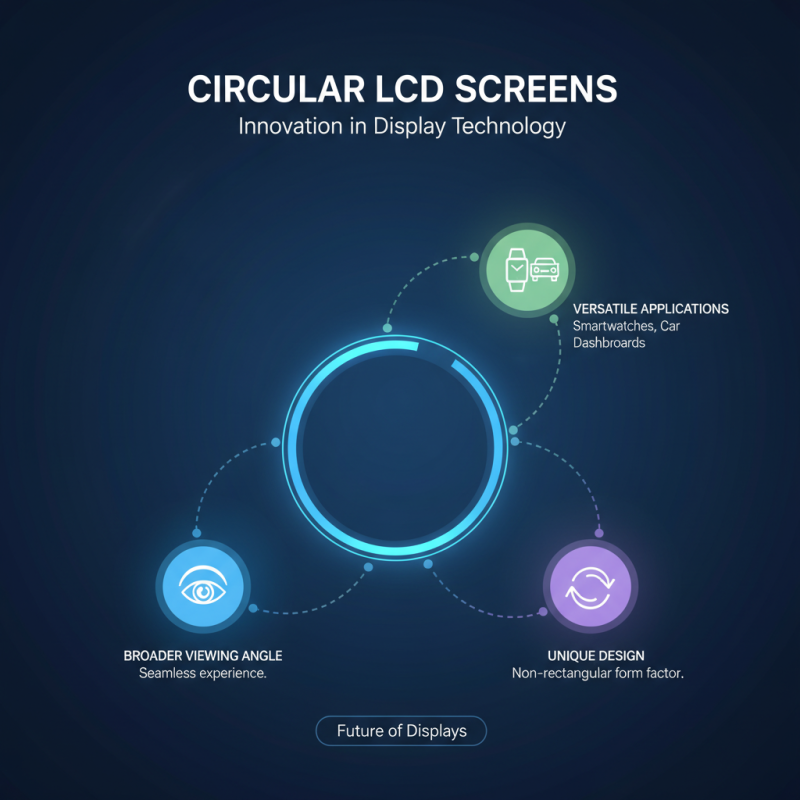
Circular LCD screens represent an exciting innovation in display technology. Their unique design allows for a broader viewing angle. Unlike traditional rectangular screens, circular displays create a seamless user experience. This makes them appealing for various applications, from smartwatches to car dashboards.
The science behind these displays relies on liquid crystal technology. Liquid crystals are special substances that flow like liquids but have ordered structures like solids. When electric currents pass through the liquid crystals, they manipulate light to produce images. This process happens quickly, allowing for smooth transitions and vibrant colors. However, achieving consistent quality across the entire circular screen can be challenging.
Moreover, the integration of circular LCD screens into devices poses certain design limitations. Engineers must ensure that these displays fit within the ergonomics of the product. Sometimes, issues arise related to color accuracy and brightness uniformity. Users may notice variations in specific areas of the screen. This prompts further innovation and refinement in the technology. Understanding these complexities helps push the boundaries of display design.
Applications of Circular LCD Screens in Various Industries
Circular LCD screens are gaining popularity across various industries due to their unique design. In automotive displays, these screens offer an innovative way to present vital information. The round shape allows for a more immersive experience. Imagine a speedometer that seamlessly wraps around your line of sight. This design is not just visually appealing; it can also enhance readability.
In wearable technology, circular LCD screens are compact and efficient. Smartwatches use these displays to provide information at a glance. Notifications, health metrics, and more can be easily accessed. However, the smaller size can limit display options. Designers must balance aesthetics with functionality.
In retail, circular screens create eye-catching displays. They attract customers and convey brand messages creatively. A circular menu display in a café can make ordering easier. Yet, the challenge lies in ensuring the information is presented clearly. Too much data can overwhelm customers. The effectiveness of circular LCD screens relies on thoughtful design.
Advantages of Circular LCD Screens Compared to Traditional Displays
Circular LCD screens offer unique advantages over traditional displays. Their shape allows for increased visual engagement. Users often find the immersive experience more captivating than standard rectangular screens. This form factor can enhance usability in various applications, particularly where aesthetics matter.
One notable advantage is the potential for better viewing angles. Circular screens can minimize distortion and glare, making visuals appear more vibrant. Such features are appealing, especially in creative industries like design or advertising. However, some may find it challenging to adapt to this unusual format. The non-traditional aspect can lead to usability issues, especially for those accustomed to rectangular displays.
Design flexibility is another benefit. Circular displays can fit into tighter spaces and unique setups. They spark creativity in product design and functionality. Yet, this innovation comes with its challenges. Not all content is optimized for circular viewing. This can limit usability in specific scenarios. The transition from traditional rectangular formats may require a period of adaptation. Overall, circular LCD screens push boundaries but also invite careful consideration.
Future Trends and Innovations in Circular LCD Screen Technology
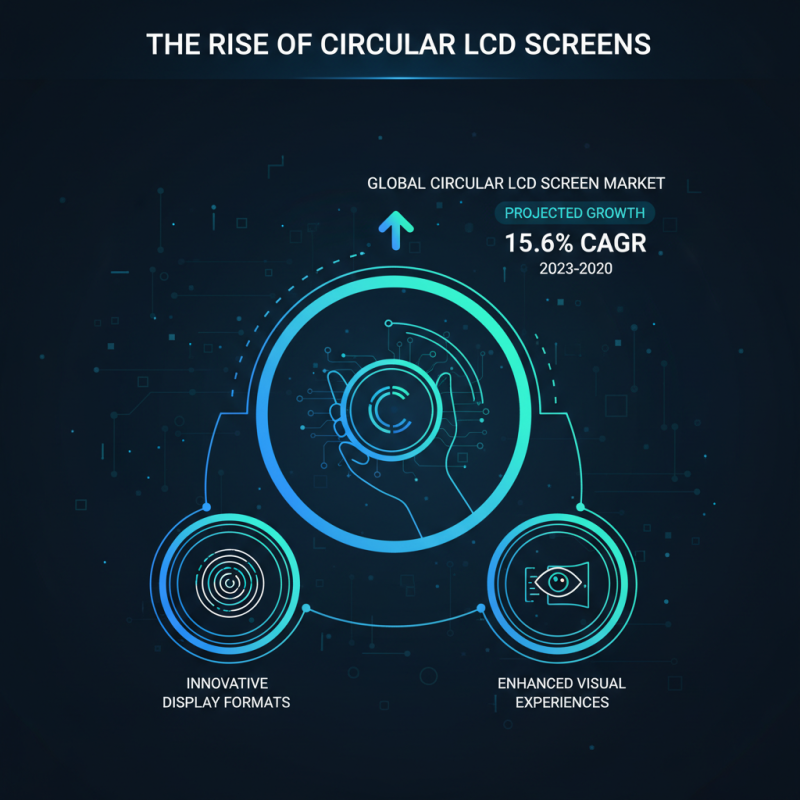
Circular LCD screens are gaining traction in various industries. The unique design captivates users and enhances visual experiences. According to recent market research, the global circular LCD screen market is projected to grow at a compound annual growth rate (CAGR) of 15.6% from 2023 to 2030. This shift reflects rising consumer preferences for innovative display formats.
As technology advances, circular LCD screens are becoming more versatile. They are now found in automotive displays, smartwatches, and home appliances. The challenge remains: how to blend functionality with aesthetics effectively. Some manufacturers struggle with integrating touch capabilities in such designs. Additionally, the need for high-resolution displays often conflicts with the complexities of circular orientations.
Future innovations may focus on enhanced resolutions and energy efficiency. Industry experts predict that OLED technology might play a crucial role in this evolution. Circular screens could also enable new user interfaces, offering engaging interactive experiences. However, there are obstacles. Manufacturing costs remain high, and scaling production can be difficult. As this field evolves, continuous reflection on design and functionality will be key to overcoming these hurdles.