What is Circular Lcd Display and How Does It Work?
In recent years, the demand for innovative display technologies has skyrocketed, particularly in the realm of Circular LCD Displays. These cutting-edge displays are not only aesthetically pleasing but also highly functional. According to a recent market report by TechNavio, the Circular LCD Display market is expected to grow by over 15% annually through 2025. This rapid growth highlights the importance of understanding how these displays work and their applications in various industries.
Dr. Emily Carter, a leading expert in display technologies, states, "Circular LCD Displays redefine how we visualize information and enhance user experience." This sentiment reflects the industry's shift towards more dynamic and engaging interfaces. Circular LCD Displays find applications in automotive dashboards, wearables, and home appliances. Each of these applications showcases the versatility and adaptability of Circular LCD technology.
Yet, despite their rising popularity, challenges remain. Issues like higher manufacturing costs and technical limitations still hinder widespread adoption. As we explore the intricacies of Circular LCD Displays, it is essential to address these hurdles. A comprehensive understanding will equip industry professionals to navigate this evolving landscape effectively.

What is a Circular LCD Display?
Circular LCD displays are becoming increasingly popular in various applications, from automotive dashboards to wearable technology. These displays feature a unique circular design that enhances visual appeal and allows for innovative user interfaces. The round shape provides better visibility and ergonomics, making it a desirable choice in modern device design.
According to a report from Allied Market Research, the global LCD display market is projected to reach $136.7 billion by 2026. Circular LCDs contribute significantly to this growth due to their versatility. They can be easily integrated into compact spaces, offering solutions where traditional rectangular displays may fall short. Recent trends indicate an increase in consumer demand for aesthetically pleasing devices, pushing manufacturers to adopt circular designs.
However, not all circular LCDs are created equally. Some designs may suffer from limited viewing angles or color distortion. It's essential for designers to consider these factors when developing new products. Moreover, the complexity of integrating advanced features into these displays can lead to increased manufacturing costs. As the market evolves, challenges such as these must be addressed to ensure the long-term success of circular LCD technology.
What is Circular Lcd Display and How Does It Work?
| Feature |
Description |
Application |
Advantages |
| Display Shape |
Circular shape allows for unique design and integration into devices. |
Watches, dashboards, and home appliances. |
Stylish appearance and aesthetic appeal. |
| Technology |
Uses liquid crystal technology to display images and information. |
Consumer electronics and automotive displays. |
High contrast and bright colors. |
| Resolution |
Varies; common resolutions include 240x240 or higher. |
Smartphones, wearables, and industrial equipment. |
Clear visibility in various lighting conditions. |
| Power Consumption |
Typically lower compared to traditional displays. |
Portable devices and battery-operated applications. |
Extended battery life in electronic devices. |
| Cost |
Varies with size and technology; generally affordable. |
Wide range of consumer products. |
Cost-effective for manufacturers. |
Key Features of Circular LCD Displays
Circular LCD displays are gaining traction due to their unique shape and applications. They are visually striking and offer several key features that set them apart from traditional LCD displays. One prominent feature is their flexibility in design, allowing for creative integration into various devices. According to a recent industry report, the market for circular displays is anticipated to grow at a compound annual growth rate (CAGR) of around 10% from 2023 to 2030.
The resolution of circular LCDs is often optimized for clarity. These displays often feature a high pixel density, ensuring vivid colors and sharp images. User interfaces can be designed to wrap around the circular shape, providing an engaging experience. However, this design also poses challenges in content alignment and readability. Adjustments may be necessary to ensure that crucial information is displayed effectively.
Power consumption is another vital aspect. Circular LCDs may require specialized backlighting techniques to maintain brightness while conserving energy. The industry suggests that advances in LED technology contribute to better efficiency in these displays. Despite progress, further innovations are needed to address lasting concerns about durability and production costs. The balance between aesthetics and functionality remains an ongoing discussion in the field.
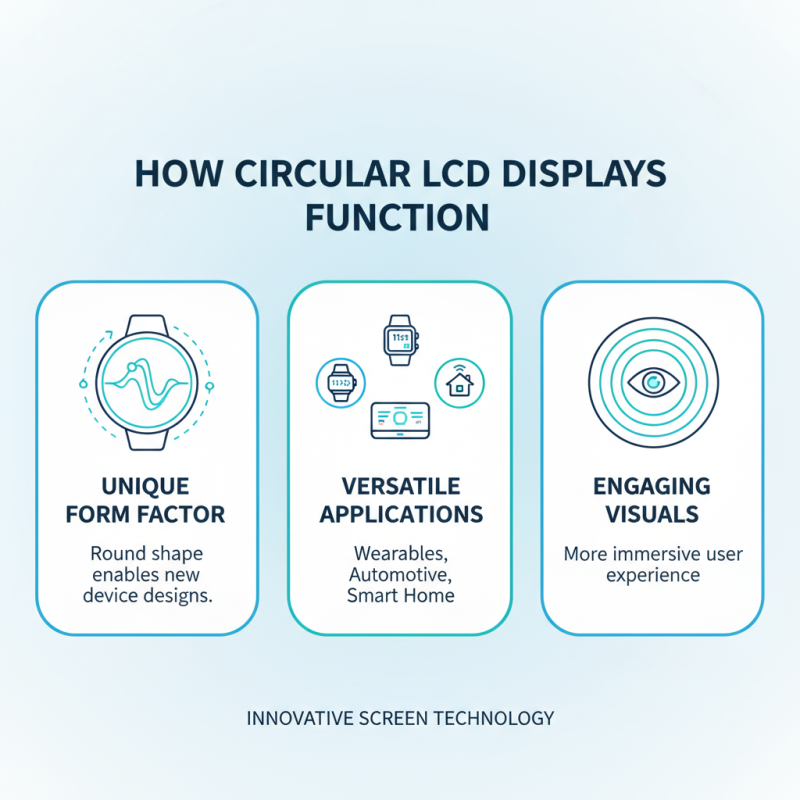
How Circular LCD Displays Function
Circular LCD displays are an innovative type of screen technology. They offer a unique form factor, allowing for versatile applications in various devices. Unlike traditional rectangular screens, circular LCDs can create a more engaging visual experience.
The functionality of circular LCD displays relies on liquid crystal technology. A backlight illuminates liquid crystals that modulate light. These crystals are arranged in a circular layout, providing a distinct visual output. The circular design can also enhance the user's interaction with the device. In many cases, it allows for better legibility from different angles.
This technology often faces challenges. The manufacturing process can be complex. Producing circular screens with high resolution is not always straightforward. Additionally, achieving color consistency across the display can be tricky. Companies continuously explore solutions to improve performance. Despite these challenges, circular LCD displays hold great potential in creating user-friendly interfaces.
Applications of Circular LCD Displays
Circular LCD displays are gaining traction in various fields due to their unique design and functionality. These displays can be seen in applications where space is limited. For instance, automotive dashboards are embracing circular designs to enhance user experience. The shape allows for a more intuitive approach to gauge readings, making information easier to digest.
In wearable technology, circular LCDs are popular in smartwatches. The round format offers a classic look while maintaining modern functionality. Users appreciate the seamless integration of technology and aesthetics on their wrists. However, the challenge remains in balancing battery life with display size. This often leads to design compromises that need careful consideration.
Additionally, circular LCDs are being utilized in home appliances. Devices like washing machines feature circular displays for cycle selection. This design improves usability, yet some users find it less intuitive than traditional designs. This highlights an ongoing need for feedback and improvement in user interface design. Circular displays, while innovative, still have room for evolution in usability and visual clarity.
Advantages of Using Circular LCD Technology
Circular LCD technology has gained traction for its unique display capabilities. This design offers a modern visual experience, making it ideal for diverse applications. One key advantage is its flexibility in layout. Circular screens can fit into smaller or uniquely shaped devices. A report by MarketsandMarkets projected the circular display market to grow at a compound annual growth rate (CAGR) of 18.5% from 2023 to 2028. This reflects a significant shift toward innovative display solutions in consumer electronics.
Moreover, circular LCDs enhance user engagement. Their immersive design can provide richer information at a glance. For instance, gauges and dials become more visually appealing. This style can improve functionality in devices like smartwatches and automotive dashboards. Such applications leverage the intuitive design of circular screens for better user interaction.
However, challenges remain. Manufacturing these displays can complicate design processes. Additionally, optimizing software for circular formats can be difficult. Companies must ensure that user experience remains fluid and intuitive. Balancing aesthetics with functionality requires continuous iteration. As technology evolves, addressing these issues will be crucial for widespread adoption.
Circular LCD Display Advantages