How to Choose the Best E Cycle Display for Your Needs?
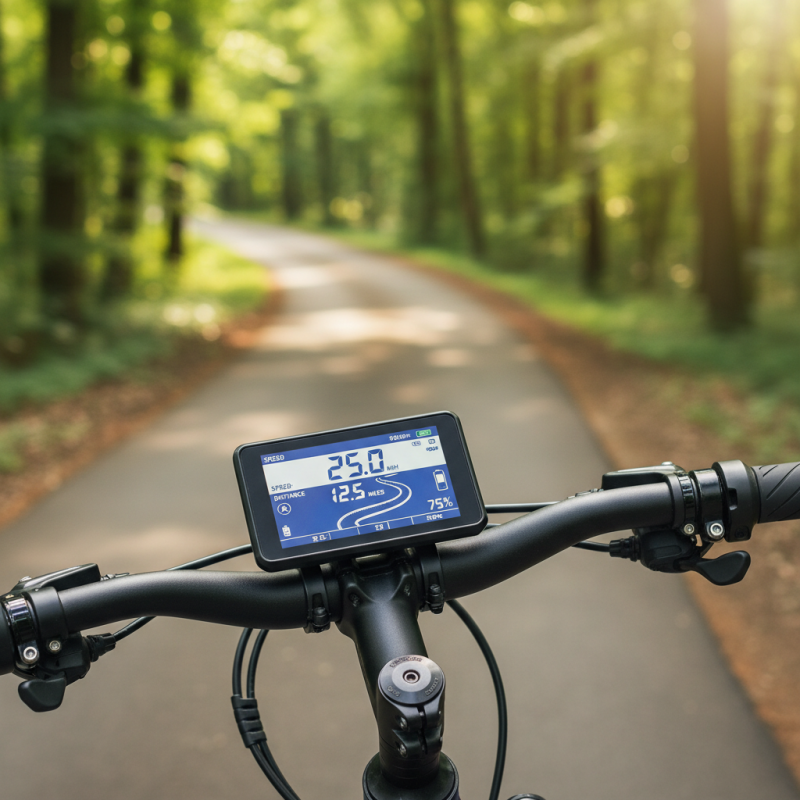
Choosing the right E Cycle Display can significantly impact your cycling experience. Displays serve as your command center. They provide crucial data, such as speed, distance, and battery level. Understanding your needs is vital when selecting the best display.
Various types exist, from basic models to advanced options with GPS and connectivity features. Are you a casual rider? A simple display may be adequate. However, if you want more data, consider higher-end options.
Take time to assess your riding style. Reflect on what information you find useful. Remember that with so many choices, making the right decision can be overwhelming. The best E Cycle Display should not only meet your needs but also enhance your overall riding experience.
Understanding Different Types of E Cycle Displays Available
When choosing an e-cycle display, you’ll notice several types available. Each type offers different features and functionalities. For instance, basic displays show speed, battery level, and distance. They are user-friendly and perfect for casual riders. However, they lack advanced metrics some users might crave.
On the other hand, more sophisticated displays provide in-depth data. You may find features like GPS navigation and heart rate monitoring. These displays can enhance your cycling experience, especially for those who train rigorously. However, they can also be overwhelming. Not everyone needs that level of detail. Take time to assess what information you truly need.
Consider weather conditions, too. Some displays are easier to read in bright sun, while others struggle. A display might serve you well on sunny days but distract during night rides. Pay attention to how these screens respond to different lighting. Ultimately, the best choice reflects your cycling habits and personal preferences. It’s a balance of functionality and simplicity.
How to Choose the Best E Cycle Display for Your Needs?
| Display Type |
Key Features |
Pros |
Cons |
Ideal For |
| LCD Displays |
Vibrant colors, easy to read |
Good visibility in daylight |
Can be difficult to read in direct sunlight |
Casual riders |
| LED Displays |
High brightness, low power consumption |
Long battery life |
Limited color display |
Night riders |
| Smart Displays |
Integration with apps, GPS navigation |
Highly functional for tech-savvy users |
Higher cost, more complex setup |
Tech enthusiasts |
| Analog Displays |
Classic design, minimalistic |
Simple and easy to use |
Limited information display |
Nostalgic riders |
Evaluating Key Features for Your E Cycle Display Selection
When selecting an e-cycle display, several key features are essential.
Screen size matters.
A larger display makes it easier to read. Consider brightness too.
A bright screen is vital for sunny days. Also, touch sensitivity can enhance user experience.
It allows for quick adjustments while riding.
Evaluate the information shown on the display. Most displays show speed, distance, and battery life.
Some can track heart rate and GPS. The more data you have, the better decisions you can make.
Think about navigation features as well. Built-in maps can help during rides in unfamiliar areas.
Installation complexity varies wildly. Some displays require tools; others are plug-and-play.
This aspect is often overlooked. The power source is also critical.
Some displays run on the bike's battery, while others need their own.
Reflect on how these factors align with your riding style and preferences.
The perfect display should enhance your experience, not complicate it.
Considerations for Display Size and Visibility in Various Conditions
When choosing an e-cycle display, size and visibility are crucial. A larger display often shows more information. However, a big screen can also be distracting. Think about where you'll ride. Will it be sunny or in low light? High contrast is essential: it helps you read numbers easily.
Consider the settings. If you ride in bright sunlight, a display with anti-glare technology is a must. In contrast, for night riding, backlighting is key. It allows you to see your information without straining your eyes. The placement of the display also affects visibility. Position it where you can glance at it without losing focus on the road.
Tips: Test different sizes. A 4-inch screen may feel compact, but sometimes less is more. Don't overspend on features you won't use. The simplest display may meet your needs without extra complexity. Remember, your comfort on the ride is paramount. Assess the wind, your speed, and your environment. Each ride teaches you something new. It’s okay if your choice evolves over time.
Battery Life and Power Consumption: What to Look for in Displays
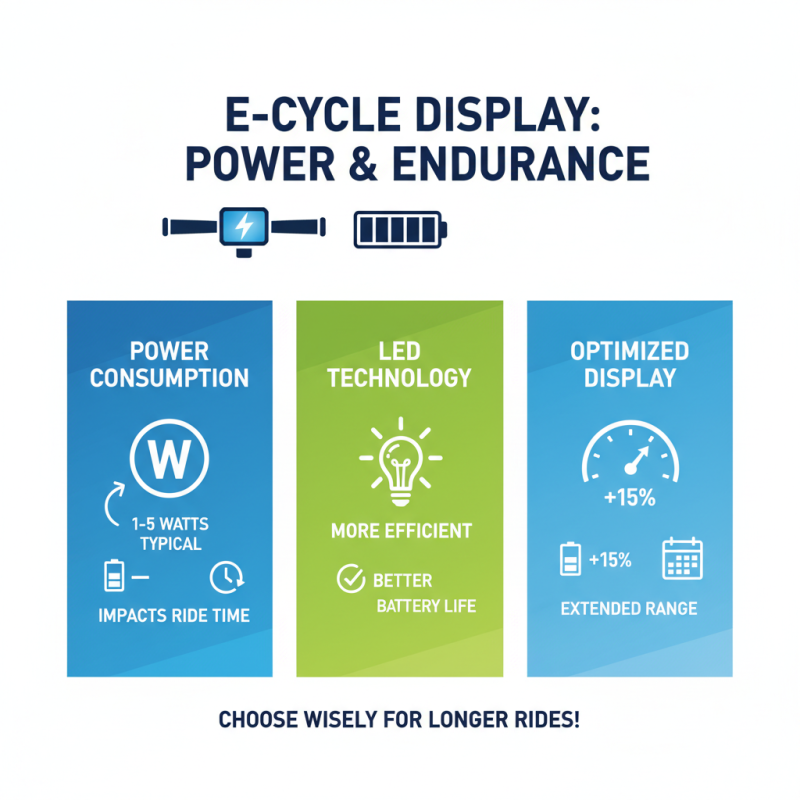
When choosing an e-cycle display, battery life and power consumption are crucial factors. A good display can consume between 1 to 5 watts of power. This can significantly impact how long your e-cycle runs between charges. Displays that use LED technology tend to be more efficient. Reports indicate that well-designed displays can enhance battery life by up to 15%.
Consider the brightness settings. Displays that adjust automatically based on ambient light can conserve energy. A high brightness setting may drain your battery faster. Some riders might not realize that even a small increase in brightness can reduce range. Depending on usage, a display that consumes 3 watts could potentially lower your cycling range by 10-15%, especially on longer rides.
Moreover, think about the features you need. Navigation and connectivity options often increase power consumption. For example, GPS functionality could double power use compared to basic readouts. Think about which features you actively use. If you don’t need constant navigation, a simpler display might be better. Assessing your typical ride can help identify the best match for your energy needs.
User Interface and Ease of Use: Enhancing Your Riding Experience
When selecting an e-cycle display, the user interface plays a crucial role. A clear and intuitive layout can enhance your overall riding experience. Look for displays that offer easy-to-navigate menus. Consider a touchscreen option if you prefer a modern feel. Physical buttons can be useful, especially with gloves on. The easier it is to access data, the more enjoyable your ride will be.
Another factor is the visibility of the display. Brightness matters, especially during bright daylight. You want to ensure you can read your speed and battery level easily. Some displays may lack contrast, making it hard to read. A display that adjusts to different lighting conditions can be essential. It's worth testing visibility under various conditions.
Finally, consider the information you really need. Does the display show just speed and distance, or does it include other metrics? Too much detail can overwhelm, while too little may leave you guessing. It’s a balancing act, and everyone’s needs differ. Think about what matters most to you as a rider.