2025 How to Choose the Best Alphanumeric LCD Display for Your Project
When embarking on a project that requires visual displays, the choice of an Alphanumeric LCD Display can be pivotal to the overall success and functionality. As technology continues to advance, the options available to designers and engineers have proliferated, making it essential to not only understand the various specifications but also to pick the right features that will suit specific project needs. Dr. Jane Smith, a leading expert in display technologies, once stated, "Choosing the right display involves a delicate balance of clarity, size, and integration capabilities, especially when working with alphanumeric data."
In this evolving landscape, factors such as resolution, size, contrast, and interface compatibility become crucial when selecting an Alphanumeric LCD Display. The decisions made at this stage can affect everything from user experience to the longevity of the product. Thus, a thorough understanding of the options at hand and how they align with project requirements can greatly enhance design efficacy. This guide aims to provide insights into choosing the best Alphanumeric LCD Display for your specific applications, ensuring that you harness the full potential of this versatile technology.

Understanding Alphanumeric LCD Displays: Key Features to Consider
When selecting the best alphanumeric LCD display for your project, it’s essential to understand the key features that will impact your design and functionality. One primary aspect to consider is the display size, typically measured in characters or pixels. Depending on your project needs, you can choose from a basic 16x2 character model or opt for larger displays that offer more information at once. The character height also plays a critical role in readability, especially in environments with varying lighting conditions.
Another important feature is the interface type. Most alphanumeric LCDs use a parallel or serial interface, which determines how easily they can communicate with microcontrollers or other devices. If your project requires quick responsiveness or multiple connections, selecting a display with a suitable interface type will be crucial. Additionally, consider the operating voltage and power requirements, as these factors can influence your system's overall efficiency.
Tips: Always check the backlight options when choosing an LCD display. A backlight can significantly improve visibility in low-light conditions, making your display usable in various environments. Also, assess the temperature range and environmental factors, as rugged displays may be necessary for outdoor or industrial applications. Finally, ensure that the display has adequate contrast and color options to enhance the overall user experience.
Alphanumeric LCD Display Features Comparison
Types of Alphanumeric LCD Displays for Various Applications
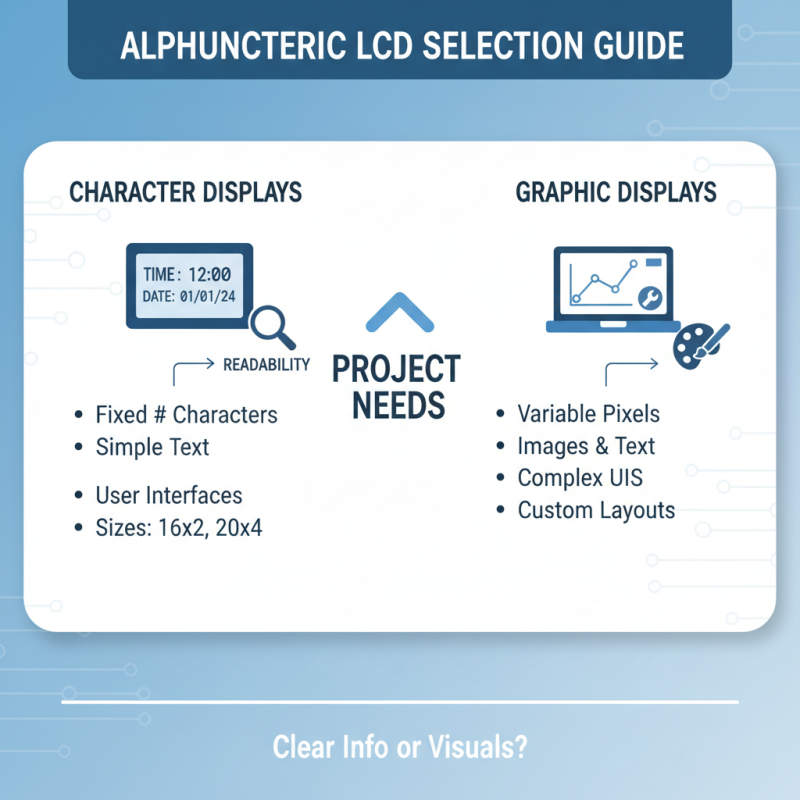
When selecting an alphanumeric LCD display for your project, it is essential to consider the specific types available, as they cater to various applications. The most common types include character displays and graphic displays. Character displays typically feature a fixed number of characters per line, making them ideal for applications like simple user interfaces, where text output is limited but clear readability is crucial. These displays often come in standard sizes, such as 16x2 or 20x4, enabling them to convey essential information without overwhelming the user.
On the other hand, graphic alphanumeric displays offer greater flexibility, allowing for the rendering of more complex information, including images and custom fonts. These displays are suitable for advanced applications such as embedded systems, where a combination of text and graphics enhances user interaction. Furthermore, they can support different resolutions and formats, thereby providing developers with the creative freedom to design interfaces tailored to specific functionality. As you assess your project requirements, recognizing the strengths of each type of display will help in choosing the best option that aligns with your design goals.
Factors Influencing the Selection of an Alphanumeric LCD Display
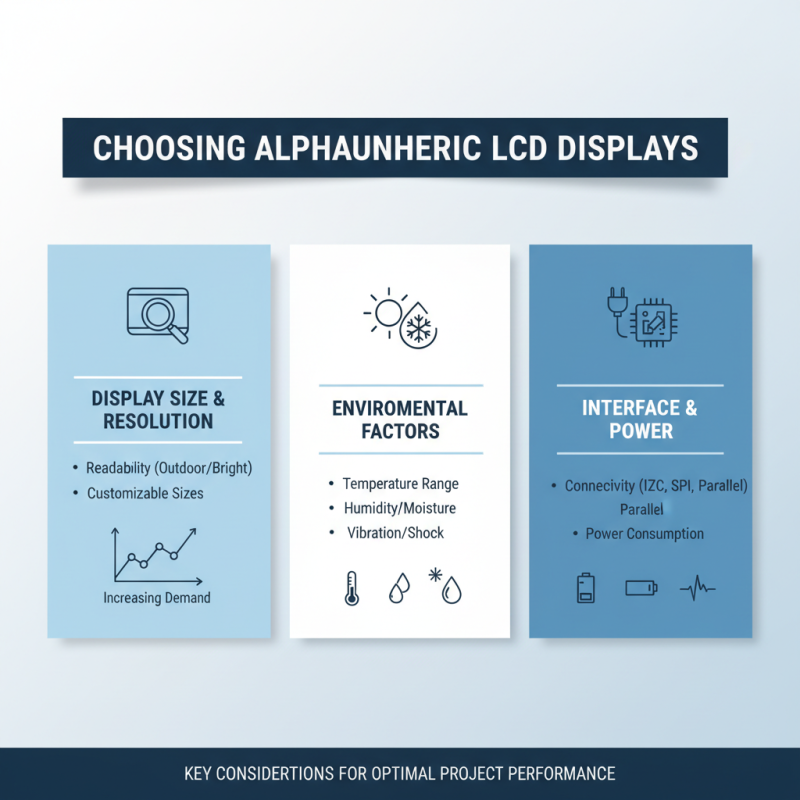
When selecting the best alphanumeric LCD display for your project, several key factors come into play that can significantly influence your decision-making process. First and foremost, the display size and resolution are critical; larger displays can enhance readability, especially in outdoor or bright environments. According to a report by Markets and Markets, the demand for customizable display sizes is increasing, driven by the rising need for interactive devices in various applications, from consumer electronics to industrial machines.
Another important consideration is the operating temperature range of the LCD display. Many projects require displays to function reliably in extreme conditions, whether it be in automotive, medical, or industrial applications. The global LCD market is projected to reach USD 163 billion by 2025, highlighting the necessity for durability and performance across varying environments. In particular, displays that can withstand temperatures from -20°C to 70°C are gaining traction, as they ensure consistent operation in diverse settings.
Additionally, power efficiency plays a crucial role in the selection process. With the increasing emphasis on energy-saving solutions, displays that consume lower power without compromising performance are preferred. A study from the International Journal of Electronics stated that innovations in LCD technology could reduce power consumption by up to 30%, making these displays not only cost-effective but also environmentally friendly. Thus, when choosing an alphanumeric LCD display, balancing size, durability, and energy efficiency is essential for achieving optimal results in your project.
Technical Specifications to Evaluate for Optimal Performance
When selecting an alphanumeric LCD display for your project, understanding the technical specifications is crucial for ensuring optimal performance. One of the primary specifications to consider is the display resolution, typically measured in pixels. A higher resolution means sharper text and clearer images, which is particularly important for applications that require precise information display. Additionally, assess the character size and the number of characters that can be displayed simultaneously, as this can affect usability and readability in various environments.
Another essential parameter is the interface type, which determines how the display communicates with your microcontroller or other devices. Common interfaces include parallel and serial communication options; choosing the right one can significantly influence ease of integration and data transfer speed. Moreover, consider the power consumption specifications, especially if your project depends on battery life. Efficiency in power use can lead to longer operational periods, making it a vital aspect for portable applications. Lastly, the contrast ratio and viewing angles can affect user interaction; selecting a display with optimal visibility under different lighting conditions is key to enhancing user experience.
Cost Considerations and Budgeting for Your Alphanumeric Display Project
When planning a project that requires an alphanumeric LCD display, understanding the cost considerations and budgeting is paramount.
The average cost of alphanumeric LCD displays can range widely depending on factors such as size, resolution, and features. According to a recent industry report, prices can vary from as low as $2 for basic models to over $50 for advanced displays with higher resolutions and additional functionalities.
Therefore, it is vital to define the project requirements clearly to avoid unnecessary expenditures.
Additionally, budgeting should encompass not just the purchase of the display, but also ancillary costs such as development, integration, and maintenance. A survey conducted by the Display Technology Association indicates that nearly 25% of project costs can stem from integration failures and subsequent troubleshooting.
This highlights the importance of allocating sufficient resources for both the initial purchase and the integration phase.
As projects become more complex, ensuring that the chosen display meets both current and future needs may require a larger upfront budget, as investing in higher-quality displays can lead to reduced long-term costs and improved performance.