How to Choose the Best LCD Display Panel for Your Project Needs
When embarking on a project that requires visual display, selecting the right Display Panel LCD is crucial to the success of your endeavor. According to Dr. Emily Chen, a renowned expert in the display technology industry, “The right display panel can enhance user experience and bring your ideas to life in vibrant detail.” With countless options available in the market today, understanding the core specifications, technology types, and intended application of Display Panel LCDs is essential for making an informed decision.
As technology continues to advance, the features of Display Panel LCDs have significantly improved, offering better resolution, color accuracy, and energy efficiency. Whether you are designing a product, developing a prototype, or setting up a presentation, knowing how to evaluate the different aspects of these panels can save time and resources. In this article, we will guide you through the key considerations and methodologies to choose the best Display Panel LCD that aligns perfectly with your project needs, ensuring that your visual representation captivates and engages your audience effectively.

Identify Your Project Requirements for an LCD Display
When selecting an LCD display panel for your project, the first step is to clearly identify your requirements. Consider the environmental conditions in which the display will operate. Will it be used in bright outdoor settings where high brightness and anti-glare features are essential? Alternatively, if it’s meant for indoor use, factors like color accuracy and viewing angles might take precedence. Understanding the operational environment will significantly influence your choice.
Next, you should evaluate the specific functionality you need from the display. Are you looking for touch capabilities, high resolution, or specific aspect ratios? Determine if the display needs to show static images or dynamic content and how quickly you need the refresh rates to be. Additionally, consider the connectivity options available for seamless integration with your existing systems. By clearly outlining these requirements upfront, you can narrow down your options and select an LCD display panel that best fits your project needs.
Display Technology Comparison for Project Needs
This chart compares various display technologies based on key specifications such as resolution, brightness (nits), and response time (ms). It helps in identifying the best LCD display panel for your project needs.
Understanding Different Types of LCD Panel Technologies
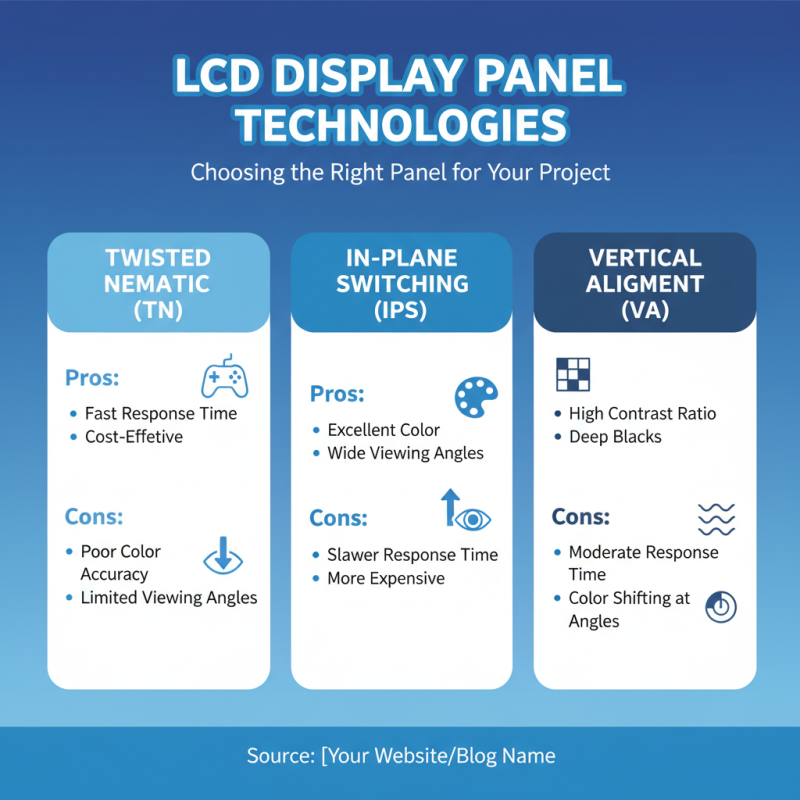
When choosing an LCD display panel for your project, understanding the different types of LCD panel technologies is essential. The most common types include Twisted Nematic (TN), In-Plane Switching (IPS), and Vertical Alignment (VA) panels. Each technology has its advantages and disadvantages, which can significantly affect the performance and suitability of the display for your specific needs.
TN panels are typically favored for their fast response times and lower production costs, making them ideal for gaming or budget-oriented applications. However, they often suffer from poor viewing angles and color reproduction compared to their counterparts. IPS panels excel in providing superior color accuracy and wider viewing angles, making them a popular choice for tasks that require precision, such as graphic design and video editing. On the other hand, VA panels offer excellent contrast ratios and deep blacks but can have slower response times and limited color accuracy, which may not be suitable for all applications. By comprehending these differences, you can make an informed decision that aligns with the visual and performance requirements of your project.
Evaluating Size and Resolution for Optimal Display Quality
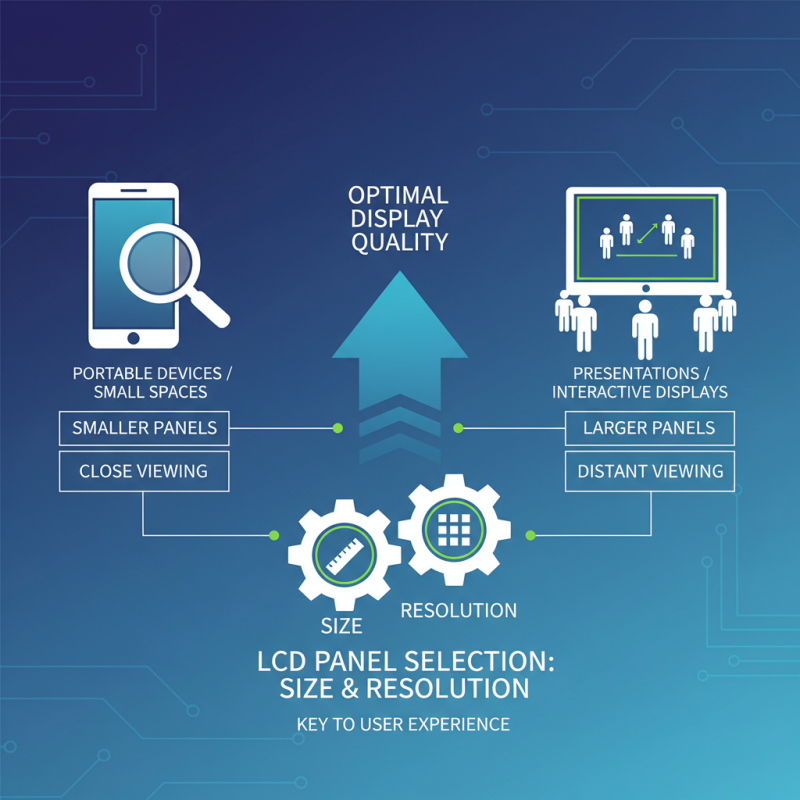
When choosing an LCD display panel for your project, evaluating size and resolution is essential to achieving optimal display quality. The size of the panel can significantly influence the user experience, as it determines how much content can be showcased and how easily it can be viewed from different distances. For instance, smaller panels may suit portable devices or confined spaces, while larger displays are often required for presentations or interactive applications where visibility from afar is crucial.
Resolution plays a critical role in the clarity and sharpness of images and text displayed on the screen. Higher resolutions translate to more pixels, which means finer details and smoother visuals. It’s important to match the resolution with the intended usage of the display; for example, a project involving high-definition video content would benefit from a panel that supports at least 1080p resolution. Additionally, considering the aspect ratio is vital, as it affects how content is formatted and perceived. A well-thought-out balance between size and resolution can make a significant difference in delivering the intended message and enhancing the viewer's overall engagement.
Assessing Response Time and Refresh Rate for Performance
When selecting an LCD display panel for your project, understanding the response time and refresh rate is crucial for optimal performance. Response time refers to the speed at which a pixel can change from one color to another, usually measured in milliseconds (ms). A lower response time signifies quicker transitions, which is particularly important for fast-moving images, gaming, or video playback. Look for panels with a response time of 5 ms or less to ensure smooth visuals without ghosting or blurring effects.
The refresh rate, measured in hertz (Hz), indicates how many times the display updates per second. A higher refresh rate leads to smoother motion and reduces screen tearing, creating a more pleasant viewing experience. For general use, a refresh rate of 60Hz is adequate; however, for gaming or high-demand visual applications, consider displays that offer 120Hz or higher. This is especially important if your project involves animations or high-speed footage.
Tips: Always check the specifications and reviews of the LCD panels you are considering. Testing the display under various conditions can also help determine if the response time and refresh rate meet your project needs. Additionally, consider your target audience and the primary use case of the panel, as these factors can significantly influence your choice.
Comparing Costs and Lifespan of Various LCD Display Panels
When selecting an LCD display panel for your project, understanding the cost and lifespan of various options is crucial. The initial investment varies significantly across different types of LCD panels, which can range from budget-friendly solutions to high-end models. Typically, cheaper panels are more susceptible to shorter lifespans due to lower-quality components and less durable manufacturing standards. For example, entry-level panels may offer costs lower than their premium counterparts but at the cost of lower brightness, contrast ratios, and viewing angles, which could ultimately impact your project.
In contrast, higher-quality LCD panels, while more expensive initially, tend to offer enhanced durability and longevity. These panels often utilize superior technologies that extend their operational life, providing better resistance to wear and environmental factors. Moreover, the longevity of a display panel is not solely determined by its price; factors such as usage conditions and maintenance practices also play significant roles. Ultimately, assessing both the initial cost and the expected lifespan will provide clearer insights, ensuring a balanced decision that aligns both with your budget and your project's long-term viability.
How to Choose the Best LCD Display Panel for Your Project Needs
| Panel Type |
Cost (USD) |
Lifespan (Hours) |
Resolution |
Brightness (cd/m²) |
| TN |
$50 |
30,000 |
1920 x 1080 |
250 |
| IPS |
$80 |
50,000 |
2560 x 1440 |
300 |
| VA |
$70 |
40,000 |
1920 x 1080 |
350 |
| OLED |
$200 |
100,000 |
3840 x 2160 |
500 |
| Mini-LED |
$150 |
75,000 |
3840 x 2160 |
600 |