How to Choose the Right Touch Display Panel for Your Project in 2025
In the ever-evolving realm of technology, selecting the appropriate Touch Display Panel for your project can significantly impact its success in 2025. As industries continue to embrace digital transformation, the demand for intuitive and responsive interfaces has surged. John Smith, a leading expert in touch technology and the CEO of Touch Innovations, emphasizes this necessity: "The right Touch Display Panel not only enhances user experience but also drives engagement and efficiency in any application."
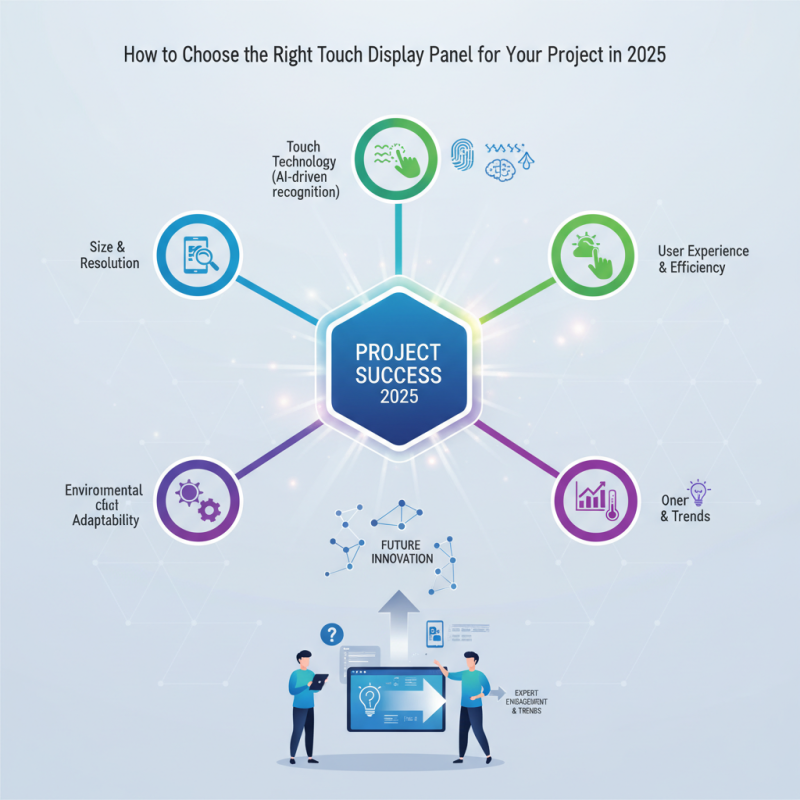
When embarking on the journey to integrate a Touch Display Panel into your project, myriad factors must be considered, including the panel's size, resolution, touch technology, and environmental adaptability. The choices available in the market are extensive, each offering unique features tailored to specific applications. Understanding these nuances is crucial, as it will allow developers and project managers to align their technology choices with user expectations and project goals.
As we look toward 2025, the convergence of advanced materials, AI-driven touch recognition, and enhanced display capabilities will redefine the potential of Touch Display Panels. Making the right decision now will not only streamline project execution but also foster innovation and customer satisfaction in the long term. Engaging with experts in the field and staying informed about emerging trends will be essential for anyone looking to harness the full power of touch technology in their upcoming projects.
Consider the Key Specifications for Touch Display Panels in 2025
When selecting a touch display panel for your project in 2025, it's essential to consider several key specifications that impact performance and user experience. First, the type of touchscreen technology—such as capacitive or resistive—plays a crucial role in determining responsiveness and durability. Capacitive screens are favored for their sensitivity and clarity, making them ideal for applications requiring precision, while resistive screens might be better suited for environments with potential exposure to liquids or contaminants.
Another important specification is the display resolution and brightness. Higher resolution panels provide clearer images and better detail, which is particularly beneficial for graphic-intensive applications. Additionally, brightness levels are paramount, especially for outdoor applications where sunlight can diminish visibility. A display with a high brightness rating enhances usability in various lighting conditions, ensuring that users can interact with the screen effectively regardless of the environment.
Lastly, consider the panel's size and aspect ratio, as these factors influence the overall design and functionality of your project. The size should accommodate user interaction without taking up excessive space, while the aspect ratio can enhance visual appeal and usability. Balancing these specifications effectively will ensure that you choose a touch display panel that meets the needs of your project in 2025, providing an optimal experience for users.
Evaluate Display Technologies: LCD vs. OLED vs. E Ink for Your Needs
When selecting a touch display panel for your project in 2025, it’s essential to consider the strengths and weaknesses of various display technologies, particularly LCD, OLED, and E Ink. According to a report by the International Display Consortium, the global market for OLED displays is projected to reach $66 billion by 2025, driven by their superior color accuracy and contrast ratios compared to traditional LCD screens. OLED technology uses organic compounds that emit light when an electric current is applied, allowing for thinner displays and higher refresh rates, making them ideal for applications requiring vibrant visuals and fast response times.
On the other hand, LCD displays, while being relatively inexpensive and widely used, often struggle with viewing angles and color reproduction. Research from the Display Industry Association indicates that advancements in LCD technology, such as IPS and Mini-LED, are reducing these limitations, yet they still cannot match the performance of OLED displays in darker environments. For projects emphasizing text readability over color vibrancy, E Ink technology presents a compelling alternative. The E Ink panel's reflective nature allows for viewing in bright sunlight without strain, making it ideal for applications like e-readers and digital signage. With the E Ink market expected to grow significantly—projected to reach $1.9 billion by 2025—it's evident that this technology satisfies specific needs where traditional displays may falter.
Evaluating these technologies in the context of your specific project requirements will be critical in making an informed decision, ensuring optimal performance and user experience.
Analyze Touch Response Times and User Interactivity Standards
When selecting a touch display panel for your project in 2025, understanding touch response times and user interactivity standards is crucial. Touch response time refers to the delay between a user’s action, such as a tap or swipe, and the system’s reaction. The ideal response time is less than 20 milliseconds, as users expect near-instantaneous feedback. Panels with faster response times enhance user experience, making interfaces more intuitive and engaging. Additionally, ensuring that the touch display is sensitive enough to recognize light taps can significantly improve usability, especially for applications requiring precision.
User interactivity standards also play a vital role in touch display selection. Factors such as multi-touch capability, gesture recognition, and haptic feedback contribute to a seamless user experience. Multi-touch functionality allows users to interact with the interface using two or more fingers simultaneously, which is essential for applications like collaborative tools and gaming. Gesture recognition technologies enable intuitive interactions, allowing users to control their devices with natural movements. Haptic feedback, providing tactile responses to touch, can further enrich the interaction by simulating physical sensations. In light of these parameters, selecting a touch display panel that aligns with modern interactivity standards will not only enhance the functionality of your project but also meet the evolving expectations of users in 2025.
Touch Display Panel Response Times in 2025
Assess Environmental Requirements: Durability and Operating Conditions
When selecting a touch display panel for your project in 2025, it is crucial to assess the environmental requirements specific to your application. Different environments pose varying challenges, such as extreme temperatures, humidity levels, and exposure to dust or chemicals. For instance, if your display will be used outdoors, it must be capable of withstanding UV radiation and heavy rain. Similarly, industrial settings may demand panels that resist oil and grease, while medical environments could require antimicrobial surfaces for hygiene.
Durability is another critical factor to consider. The touch display panel should be robust enough to handle physical impacts and frequent use, especially in high-traffic areas. Features such as reinforced glass, scratch resistance, and the ability to operate under vibration or shock will ensure that the panel remains functional and retains its quality over time. Additionally, it is important to evaluate the operating conditions, including the range of temperatures and humidity levels in which the display will function. By aligning these environmental requirements with the specifications of the touch display panel, you can ensure that your choice will enhance the overall performance and longevity of your project.
How to Choose the Right Touch Display Panel for Your Project in 2025 - Assess Environmental Requirements: Durability and Operating Conditions
| Environmental Condition |
Required Durability |
Operating Temperature Range |
Humidity Resistance |
IP Rating |
| Indoor |
Moderate |
15°C to 30°C |
20%-80% |
IP20 |
| Outdoor |
High |
-20°C to 50°C |
10%-90% |
IP65 |
| Industrial |
Very High |
-30°C to 70°C |
10%-95% |
IP67 |
| Medical |
High |
10°C to 40°C |
30%-75% |
IP54 |
Compare Cost-Effectiveness and ROI for Different Display Solutions
When selecting a touch display panel for your project in 2025, it is crucial to evaluate the cost-effectiveness and return on investment (ROI) of different display solutions. The upfront cost of a display panel is often just the beginning; factors such as durability, maintenance requirements, and lifespan must also be taken into account. A higher initial investment in a more advanced display technology may ultimately result in lower total ownership costs, thanks to reduced energy consumption and fewer replacements over time. Understanding the total cost of ownership can help justify the higher price while aligning with budget constraints.
In addition to costs, analyzing the potential ROI of each display solution allows for a comprehensive evaluation. Consider how the touch display will enhance user experience, engagement, and operational efficiency for your project. Metrics like increased sales or improved customer satisfaction can provide invaluable insights. Balancing the initial investment against projected long-term benefits will lead to smarter decision-making, ensuring that the chosen display not only meets immediate project needs but also contributes to sustained growth and profitability in the future.