How to Choose the Best TFT Color Monitor for Your Needs in 2025
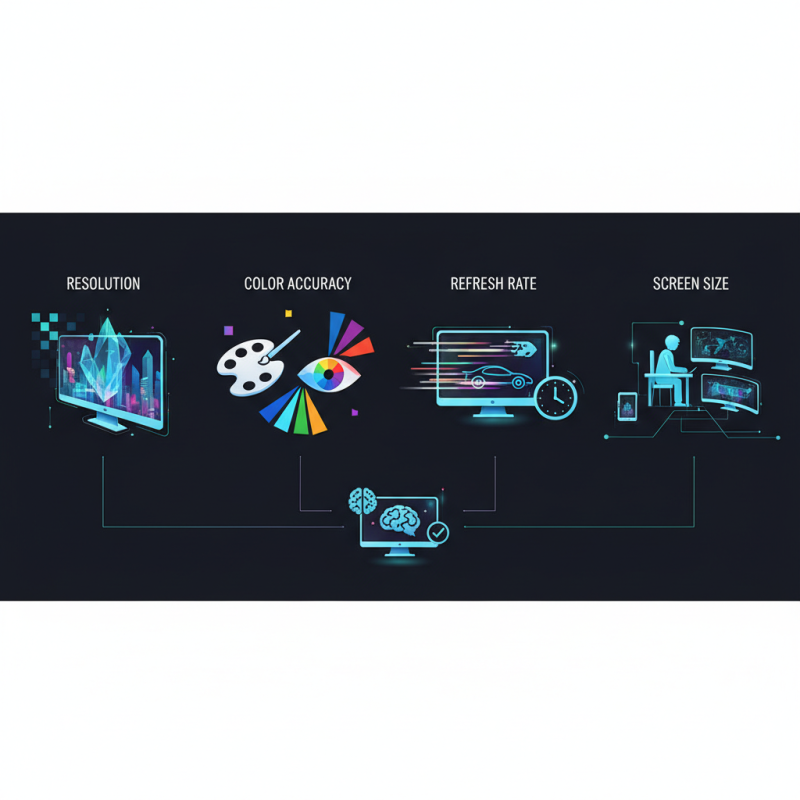
In the rapidly evolving world of technology, choosing the right TFT color monitor has become increasingly important for both professionals and casual users alike. As we look toward 2025, understanding your specific needs and how a TFT color monitor can meet them is crucial. According to Dr. Emily Carter, a leading expert in display technology, "Selecting the right TFT color monitor is not just about resolution; it’s about finding the perfect balance between color accuracy, refresh rate, and screen size to enhance your productivity and enjoyment."
TFT color monitors have seen significant advancements in technology that enhance visual performance, making it easier than ever to enjoy crisp, vibrant images. Whether you are a graphic designer requiring precise color representation or a gamer seeking smooth, fast refresh rates, the right monitor can significantly affect your experience. As we explore the factors to consider when purchasing a TFT color monitor, it is essential to prioritize your unique requirements and preferences to make an informed decision that will serve you well into the future.
Understanding TFT Technology and Its Advancements by 2025
TFT technology, or Thin Film Transistor technology, has evolved significantly over the years, leading to remarkable advancements that will shape the landscape of color monitors by 2025. Key improvements in resolution, color accuracy, and energy efficiency have made TFT displays more suitable for a wide range of applications, from gaming and graphic design to everyday productivity tasks. The introduction of enhanced color gamut capabilities allows for deeper and more vibrant colors, making screens not just more visually appealing but also more accurate for professional work.
When choosing a TFT monitor, it’s crucial to consider the intended use. For instance, if you are an artist or a graphic designer, prioritize monitors that offer high color accuracy and wider color spaces. On the other hand, gamers may want to focus on response times and refresh rates to enhance their gaming experience.
Tip: Always check the monitor’s specifications for features like HDR support, which can improve contrast and color range, bringing your visuals to life. Additionally, consider the ergonomics of the monitor; adjustable stands and VESA compatibility can greatly enhance your comfort during extended use. By understanding these advancements in TFT technology and aligning them with your specific needs, you can make an informed decision when purchasing a monitor in 2025.
Key Features to Consider When Choosing a TFT Color Monitor
When choosing the best TFT color monitor for your needs in 2025, several key features must be taken into consideration to ensure you make an informed decision. First, display resolution plays a crucial role; with the increasing demand for high-definition content, a minimum resolution of 1920x1080 (Full HD) has become standard. Reports indicate that nearly 70% of consumers now prefer monitors that offer higher resolutions, such as 4K (3840x2160), for tasks like graphic design and gaming that require enhanced visual clarity.
Another essential feature is color accuracy, which is particularly important for professionals in photography, design, and video editing. Monitors with a wide color gamut, such as those supporting Adobe RGB or DCI-P3, provide more vibrant and true-to-life colors. According to industry research, monitors exceeding 99% color accuracy in the sRGB spectrum are favored by 80% of professionals to ensure that their work translates well across different media. Thus, when exploring options, checking calibration and performance metrics is vital to avoid discrepancies in color representation.
Additionally, response time and refresh rate cannot be overlooked, especially for gamers and those dealing with fast-moving visuals. A response time of 5ms or lower is generally recommended to minimize motion blur, while a refresh rate of 144Hz or higher caters to fluid motion and enhanced gameplay. As the demand for immersive experiences rises, prioritizing these specifications can contribute significantly to one’s overall satisfaction with a TFT color monitor in 2025.
How to Choose the Best TFT Color Monitor for Your Needs in 2025 - Key Features to Consider When Choosing a TFT Color Monitor
| Feature |
Description |
Importance Rating (1-5) |
| Screen Size |
Larger screens offer better immersion and multitasking capabilities. |
5 |
| Resolution |
Higher resolution provides sharper and clearer images. |
5 |
| Refresh Rate |
Higher refresh rates ensure smoother motion, ideal for gaming. |
4 |
| Color Accuracy |
Critical for photo editing and design work to ensure colors are true to life. |
5 |
| Aspect Ratio |
Widescreen (16:9) vs. UltraWide (21:9) affects your viewing experience. |
3 |
| Connectivity Options |
Multiple ports (HDMI, DisplayPort, USB-C) cater to various devices. |
4 |
| Brightness Levels |
Higher brightness enhances visibility in bright environments. |
4 |
| Viewing Angles |
Wide viewing angles improve visibility from different positions. |
3 |
| Adjustability |
Height, tilt, and swivel adjustments for ergonomic comfort. |
4 |
Assessing Your Specific Needs for Optimal Monitor Selection
When selecting the best TFT color monitor for your needs in 2025, it is essential to begin by assessing your specific requirements. Identifying the primary use of the monitor—be it for gaming, graphic design, office work, or casual browsing—forms the foundation of your decision-making process. According to a recent industry report from DisplaySearch, the demand for monitors with wider color gamuts, such as Adobe RGB and DCI-P3, has increased by 35% over the past two years, highlighting the importance of color accuracy for professional applications. This underscores the necessity of aligning your monitoring needs with industry standards, particularly if color fidelity is paramount in your work.
Additionally, factors such as screen size, resolution, refresh rates, and panel technology also play vital roles in optimizing your monitor selection. Research from the International Display Consortium (IDC) indicates that 4K resolution monitors have seen a 50% market growth year-on-year as users increasingly seek elevated image quality for both work and entertainment. For gamers, monitors boasting higher refresh rates (144Hz and above) are not just trendy but essential for a competitive edge. Understanding these specifications allows potential buyers to make informed decisions that cater specifically to their activities, ensuring a seamless integration of the monitor into their overall workflow or lifestyle.
Comparing Brands and Models: What to Look For
When selecting the best TFT color monitor for your needs in 2025, it’s essential to examine various brands and models while considering key specifications that align with your usage requirements. The display panel technology, resolution, and color accuracy significantly influence the viewing experience. According to a recent industry report from Display Supply Chain Consultants, TFT monitors with at least 4K resolution are becoming increasingly standard, driven by consumer demand for high-quality visuals in gaming and multimedia. As such, opting for a monitor with a minimum of 3840 x 2160 resolution can enhance detail and clarity, which is critical for graphic design, video editing, and gaming.
In addition to resolution, another crucial aspect to evaluate is the color reproduction capabilities of the monitor. Most modern TFT monitors boast a color gamut covering 99% or more of the sRGB spectrum, which is essential for those working in color-sensitive fields. A study by the International Display Consortium highlights that wider color gamuts not only improve aesthetic quality but also ensure that professionals can trust their displays for accurate color representation. Moreover, features like HDR support and high refresh rates (144Hz or higher) are vital for responsiveness and performance, particularly in fast-paced applications. As you navigate through various offerings, these specifications will help you identify the best TFT color monitor tailored to your specific needs.
Future Trends in TFT Monitors and Their Impact on Your Choice
As we look towards 2025, the trends in TFT color monitors indicate significant advancements that will shape user choices in the coming years. One prominent trend is the ongoing development of OLED technology integration within TFT panels. According to a recent market analysis by Research and Markets, the global OLED display market is projected to grow at a CAGR of over 15% between 2023 and 2028. This growth will likely push manufacturers to adopt OLED features in their TFT monitors, offering users enhanced color accuracy, deeper blacks, and improved energy efficiency.
Another emerging trend is the increased focus on sustainability in monitor production. A report from the International Data Corporation (IDC) highlights that by 2025, approximately 30% of consumers will prioritize eco-friendly products when making purchases. This shift will prompt manufacturers to adopt greener materials and more efficient manufacturing processes for their TFT monitors. These innovations could dramatically influence consumer purchasing decisions, as buyers increasingly seek monitors that not only meet their performance needs but also align with their values regarding environmental sustainability.
Lastly, the rise of remote work is reshaping the requirements for display technology. Market analysis indicates that the demand for high-resolution monitors has surged by 40% since the onset of the pandemic, largely driven by the need for better multitasking capabilities in home office setups. As users continue to enhance their home workstations, the evolution of TFT technology will need to cater to higher resolutions, improved refresh rates, and greater connectivity options to meet these growing demands.
Comparison of TFT Monitor Features in 2025