Why Choose Alphanumeric LCD Display for Your Next Project?
In today's fast-paced technological landscape, making the right display choice is crucial for project success. Alphanumeric LCD displays offer a unique blend of functionality and reliability. They are lightweight, versatile, and cost-effective, making them ideal for various applications.
These displays can show both letters and numbers. This feature is essential for many tasks. Whether you're developing a simple gadget or a complex system, Alphanumeric LCD displays can communicate information effectively. Their low power consumption is a significant advantage for battery-powered devices. However, developers must also consider display size and resolution for their specific needs.
While Alphanumeric LCD displays are popular, they are not perfect. Some users may find them limiting compared to more advanced options. It's essential to weigh these factors carefully. Understanding the pros and cons can lead to better decision-making for your project. In this evolving tech environment, choosing the right display is a vital step toward success.

Understanding Alphanumeric LCD Displays and Their Components
Alphanumeric LCD displays are widely used in various projects. Understanding their components is essential for effective implementation. These displays use liquid crystal technology to show characters. They typically include a glass substrate, liquid crystal layer, and electrodes. The combination creates visible characters when an electric current is applied.
When designing with these displays, consider their limitations. They may not show colors, which can restrict visual communication. The resolution might also be insufficient for complex graphics. In some cases, viewing angles can be an issue. This may lead to difficulty in reading from different positions. Yet, they are energy-efficient, making them great for battery-powered devices.
Pay attention to the contrast ratio when selecting an alphanumeric LCD. Poor contrast can hinder usability, especially in bright environments. Calibration may be necessary for optimal brightness. The character size also plays a vital role in readability. A larger font may be needed for certain applications, while smaller ones save space. Striking the right balance is crucial for success.
Understanding Alphanumeric LCD Display Usage in Different Industries
Key Advantages of Alphanumeric LCD Displays in Various Applications
Alphanumeric LCD displays have become a popular choice in various applications. Their versatility makes them suitable for everything from simple gadgets to complex industrial machines. These displays can show both letters and numbers, making them easy to read and interpret. This clarity is crucial in environments where quick information access is needed. They excel in low-light conditions, which is often a necessity for user-friendly devices.
One significant advantage is their efficient power consumption. They tend to use less energy than full graphical displays. This is beneficial for battery-operated devices, extending their operational life. However, one potential downside is that alphanumeric displays have limitations in graphics. This can restrict design choices, requiring careful consideration during the planning stage. Designers must weigh these limitations against the need for clear text and data presentation.
Moreover, alphanumeric displays are relatively affordable. This cost-effectiveness allows for broader accessibility in projects. Yet, the trade-off for lower costs might lead to compromises in features like brightness or size. It’s essential to assess whether these trade-offs align with the project's goals. In some cases, it may be worthwhile to invest in a more feature-rich display to meet specific requirements.
Why Choose Alphanumeric LCD Display for Your Next Project?
| Feature |
Description |
Applications |
Advantages |
| Cost-Effective |
Alphanumeric LCDs are generally less expensive compared to graphic displays. |
Consumer Electronics, Appliances |
Lower costs help to reduce overall project expenses. |
| Low Power Consumption |
These displays consume less power, extending battery life in portable devices. |
Mobile Devices, IoT Devices |
Ideal for battery-operated systems. |
| Ease of Integration |
Alphanumeric LCDs are simple to integrate with microcontrollers. |
Embedded Systems, Controllers |
Saves development time and cost. |
| Readability |
Designed for high contrast, ensuring easy readability in various lighting conditions. |
Industrial Equipment, Medical Devices |
Enhances user experience and reduces errors. |
| Durability |
Robust design suitable for various environments. |
Automotive, Outdoor Electronics |
Reliable performance in harsh conditions. |
Comparing Alphanumeric LCD Displays with Other Display Technologies
Alphanumeric LCD displays offer unique advantages over other technologies. They provide clear characters, making them ideal for various applications. The simplicity of these displays enables straightforward integration into projects. Moreover, they consume less power than their more advanced counterparts. This efficiency is advantageous, especially for battery-operated devices.
When compared to LED or OLED displays, alphanumeric units shine in specific scenarios. They are easier to read in bright conditions, unlike some screens that struggle with glare. However, their graphics capabilities are limited. Designers may face challenges when trying to create intricate visuals. Alphanumeric displays lack the richness of color that full-color displays provide. This could deter projects needing advanced graphics.
Another consideration is the cost factor. While alphanumeric displays are often budget-friendly, they may not suit high-end applications demanding visual flair. It's crucial to weigh these pros and cons carefully. A project that requires straightforward information display benefits from an alphanumeric LCD. Conversely, a project focused on visuals might require rethinking. Balancing simplicity with performance is key for successful outcomes.
Practical Considerations for Integrating Alphanumeric LCD Displays
When considering a project that requires visual output, alphanumeric LCD displays offer unique advantages. These displays effectively communicate data, using alphanumeric characters to convey information clearly. According to a report from MarketsandMarkets, the global LCD market is expected to grow by over 6.2% annually, reflecting the demand for such technologies.
Integrating alphanumeric displays comes with practical considerations. The display size affects readability in different environments. For outdoor projects, brightness and contrast become crucial. Always account for potential glare and environmental factors. A study by Display Supply Chain Consultants shows that 63% of users encounter visibility issues outdoors.
**Tip:** Choose the right size. A 16x2 character display is often suitable for simple applications. Adjust it based on user distance and context.
Power consumption is another key factor. Alphanumeric displays are often more energy-efficient than graphic displays. However, the settings chosen can significantly influence power use. The same study finds that nearly 22% of design decisions overlook power efficiency.
**Tip:** Use low-power modes when possible. Test the display under different conditions to ensure optimal performance. Reflect on the need for future upgrades; flexibility can save costs later.
Future Trends in Alphanumeric LCD Display Technology and Innovations
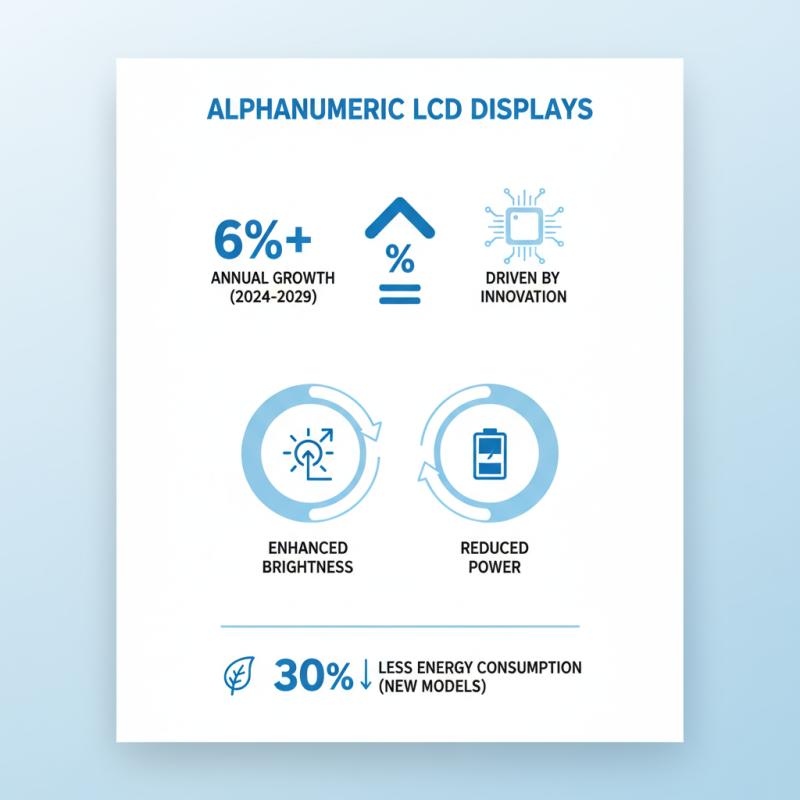
Alphanumeric LCD displays are seeing rapid advancements. Recent market research indicates that the industry will grow by over 6% annually through the next five years. This growth is largely driven by innovations in design and functionality. Manufacturers are focusing on enhancing brightness and reducing power consumption, making these displays more attractive for various applications. Improved efficiency is a significant trend, with some new models consuming up to 30% less energy compared to their predecessors.
Integration with smart technology is another emerging trend. Alphanumeric LCDs are now being designed to connect seamlessly with IoT devices. This trend opens doors for smarter applications in consumer electronics, automotive displays, and industrial automation. Despite these advancements, challenges remain. The cost of high-quality displays is often a concern. Not all manufacturers can achieve optimal clarity and longevity. Potential customers must carefully evaluate the balance between price and performance.
User experience also plays a critical role in the evolution of these displays. We see a demand for customization, with users wanting different colors and layouts. While some advancements have met this demand, many products still fall short. Companies must listen to consumer feedback. The path forward requires adaptability and an understanding of user needs. Continuous improvement will define the future of alphanumeric LCD display technology.