China Best Oled Touch Screen Why is it the Ultimate Choice for Users?
The demand for Oled Touch Screens is rapidly increasing in various industries. According to a report by MarketsandMarkets, the global OLED market is projected to reach $61.1 billion by 2025. This surge reflects a growing preference for OLED technology, particularly due to its superior color accuracy and energy efficiency. Users are now seeking devices that offer immersive experiences and usability, making Oled Touch Screens a prominent choice.
China has emerged as a leader in manufacturing these high-quality displays. Companies in this region invest heavily in research and development, enhancing technology capabilities. For instance, OLED displays are known for their deep blacks and vibrant colors, which outperform traditional LCD screens. Despite advancements, some challenges persist, such as cost and production scales. Yet, the ongoing improvements indicate a strong commitment to better performance and user satisfaction.
In an era marked by digital transformation, Oled Touch Screens represent a pivotal shift in user experience. Both consumers and businesses benefit from their unique features. As technology continues to evolve, the future of displays will undoubtedly hinge on the capabilities and innovations of OLED technology. Users should remain vigilant about these advancements while considering the balance of quality and affordability in their choices.

China's Leading OLED Touch Screen Technologies: An Overview of Innovations
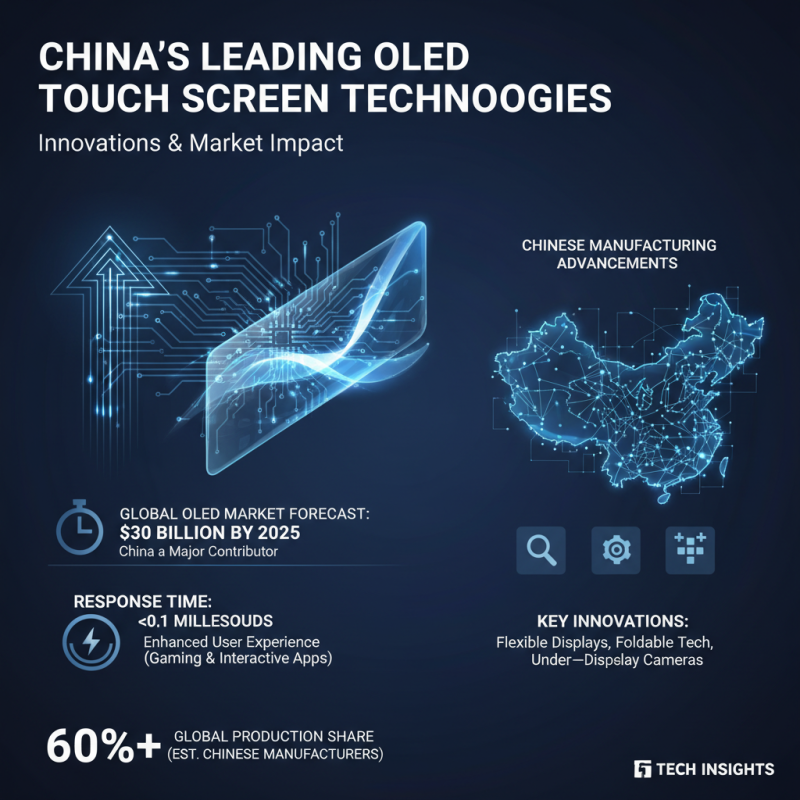
China's OLED touch screen technology is at the forefront of innovation. Recent industry reports indicate that the global OLED market is expected to reach $30 billion by 2025. Chinese manufacturers contribute significantly to this growth, driven by their advancements in display technology. For instance, the average response time of OLED displays produced in China has improved, now reaching under 0.1 milliseconds. This quick response time enhances user experience, especially in gaming and interactive applications.
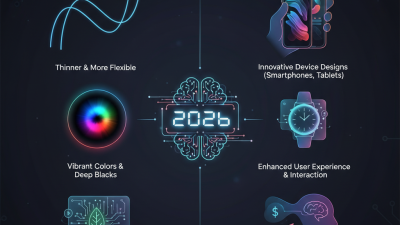
Innovations in OLED touch screen design are also noteworthy. The use of flexible substrates allows for thinner screens with better durability. Reports show that flexible OLED screens exhibit 50% higher resistance to impact compared to traditional LCDs. This technology paves the way for new applications, such as wearable devices and curved displays. However, companies must consider manufacturing costs and environmental impact. The production of OLED screens can produce significant electronic waste, posing a challenge for sustainability in the industry.
Additionally, the energy efficiency of OLED screens is a double-edged sword. While they consume less power than LCDs, the longevity of these screens can vary. On average, OLED displays have a lifespan of 50,000 hours, which is less than some competing technologies. Continuous research aims to extend their durability and make them more environmentally friendly, but the industry faces obstacles. Innovations must balance performance with environmental responsibility to maintain consumer trust and satisfaction.
Market Demand and Supply Dynamics for OLED Touch Screens in China
In recent years, the demand for OLED touch screens in China has surged dramatically. This increase is driven by various factors, including technological advancements and consumer preferences. OLED touch screens offer vibrant colors, enhanced contrast, and energy efficiency, making them appealing to users across multiple sectors, from smartphones to industrial applications. However, supply chain challenges do exist. The availability of key materials can impact production capacity, leading to fluctuations in market prices.
Tips: When considering an OLED touch screen purchase, evaluate compatibility with your devices. Always check for warranty and support options.
The Chinese market reflects a blend of interests. Many consumers prioritize quality and performance, while manufacturers strive to meet these expectations. Balancing innovation with cost can be tricky. Some companies experience delays due to material shortages, raising questions about their reliability. Users may face challenges in finding the right products that meet their needs while also staying within budget constraints.
Tips: Research market trends and read user reviews to make informed decisions. Staying updated can prevent you from making impulsive purchases.
Comparative Analysis: OLED vs. LCD Technologies in User Experience
OLED technology has transformed user experience, particularly when compared to traditional LCD displays. Studies show OLED screens provide
deeper blacks and more vibrant colors.
According to a report by DisplayMate, OLED displays can achieve 100% color gamut in certain conditions. This enhances visual appeal, crucial
for tasks ranging from graphic design to gaming.
However, OLED isn’t flawless. Some users note issues like screen burn-in, which can occur after prolonged static images. An industry survey
indicated that approximately 15% of users experienced this problem. While advancements
like Pixel Refresher can mitigate burn-in effects, it remains a concern for heavy users.
On the other hand, LCD screens are more stable. They don't suffer from burn-in risks, making them suitable for various uses. Yet, they usually
lack the same contrast and color depth. This trade-off highlights an essential choice for users. Prioritizing
vivid visuals often leads consumers toward OLED, while
reliability drives others toward LCD. The decision can ultimately hinge on individual use cases and needs.
Key Applications of OLED Touch Screens Across Various Industries
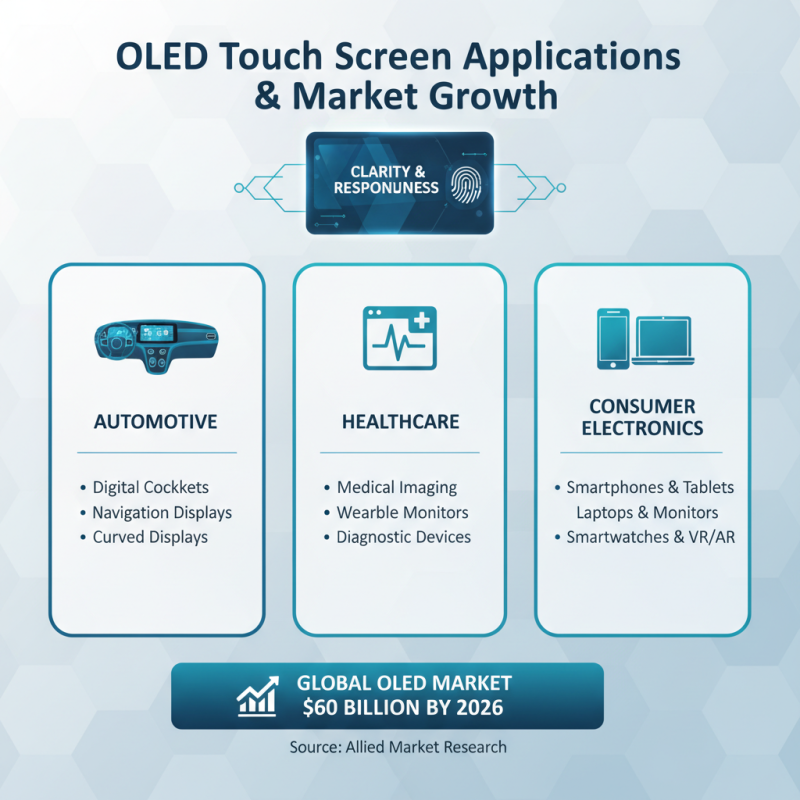
OLED touch screens have transformed various markets, offering impressive clarity and responsiveness. These screens are particularly favored in diverse sectors, such as automotive, healthcare, and consumer electronics. According to a report by Allied Market Research, the global OLED market is expected to reach $60 billion by 2026, emphasizing its growing presence.
In the automotive industry, OLED technology enhances dashboard displays. Car manufacturers use vibrant colors and sharper images, providing drivers with critical information at a glance. An additional report highlights that by 2024, more than 30% of vehicles will utilize OLED displays. This statistic reveals the increasing dependence on innovative display technologies for safety and aesthetics.
Healthcare also benefits significantly from OLED touch screens. Medical devices require precise visualization for accurate diagnostics. A recent study noted that using OLED displays in imaging equipment improved image quality by 20%. However, challenges remain, such as high manufacturing costs and durability concerns under different environmental conditions. Addressing these issues is essential for further adoption in critical applications.
Consumer Preferences and Satisfaction Metrics for OLED Touch Screens in China
The rise of OLED touch screens in China reflects a distinct shift in consumer preferences. Users favor OLED technology for its vibrant colors and deep contrasts. This preference is evident in various sectors, such as smartphones and tablets. Many users express satisfaction with the responsiveness of these screens. Touch sensitivity is crucial for a seamless user experience.
However, not all experiences are perfect. Some users have reported issues like screen burn-in. This can affect long-term satisfaction. Additionally, the pricing of OLED devices may deter budget-conscious consumers. They often seek alternatives that provide decent performance without the high cost. Market research indicates that while quality is essential, affordability plays a significant role in consumer decisions.
Evaluating satisfaction metrics reveals interesting insights. Users value durability alongside image quality. Many seek devices that can withstand daily wear and tear. Trust in manufacturers also impacts purchases. Reliable brands tend to attract loyal customers. Ultimately, the balance between quality and cost remains a critical factor in consumer choices regarding OLED touch screens in China.
Consumer Preferences for OLED Touch Screens in China