Touch Display Panel Buying Guide Tips for Global Buyers
The market for Touch Display Panels is witnessing significant growth. Research from MarketsandMarkets predicts that the global touch display market will reach $70 billion by 2025, with a compound annual growth rate (CAGR) of 10.5%. This surge is due to increasing demand in sectors like consumer electronics, automotive, and healthcare.
Global buyers face challenges when selecting the right touch display panel. Factors such as compatibility, technology type, and environmental conditions play vital roles. While many manufacturers offer a variety of options, it is essential for buyers to evaluate their specific needs carefully. A choice may lead to superior user experiences or, conversely, costly replacements.
Understanding the diverse technologies is crucial. Capacitive and resistive panels have distinct benefits and limitations. Buyers often overlook the importance of durability and response time. Making informed decisions requires a blend of data analysis and practical understanding. The insights shared in this guide aim to assist buyers in navigating these complexities effectively.

Understanding Touch Display Panel Technologies: Capacitive vs. Resistive
When exploring touch display panel technologies, two main types emerge: capacitive and resistive. Capacitive panels are popular in modern mobile devices. They use the electrical properties of the human body to detect touch. According to a report by MarketsandMarkets, the capacitive touch panel market is expected to reach $45.5 billion by 2026, driven by demand from consumer electronics. These panels offer multi-touch capabilities and are known for their high durability and clarity.
In contrast, resistive touch panels have their merits as well. They consist of multiple layers that detect pressure. This technology remains relevant in industries like automotive and healthcare, where gloves or styluses are often used. A study from Technavio suggests that the resistive touch panel market could see a CAGR of 6% from 2021 to 2025. While they may lack the responsiveness of capacitive panels, they are cost-effective for specific applications.
When buying touch display panels, consider the environment. Resistive panels often perform better in harsh conditions. Think about how users will interact with the display. If they need precision, resistive panels may suit your needs. For a modern user experience, capacitive panels are ideal but be cautious of possible compatibility issues with certain devices. Take time to assess the requirements before making a choice.
Touch Display Panel Buying Guide Tips for Global Buyers
| Technology Type |
Sensitivity |
Durability |
Calibration |
Cost |
Common Applications |
| Capacitive |
High touch sensitivity |
Very durable (scratch resistant) |
Generally auto-calibrated |
Higher cost |
Smartphones, Tablets, Kiosks |
| Resistive |
Moderate touch sensitivity (requires pressure) |
Less durable (prone to scratches) |
Requires manual calibration |
Lower cost |
Industrial devices, Touch-screen monitors |
Key Factors to Consider When Buying Touch Display Panels for Global Use
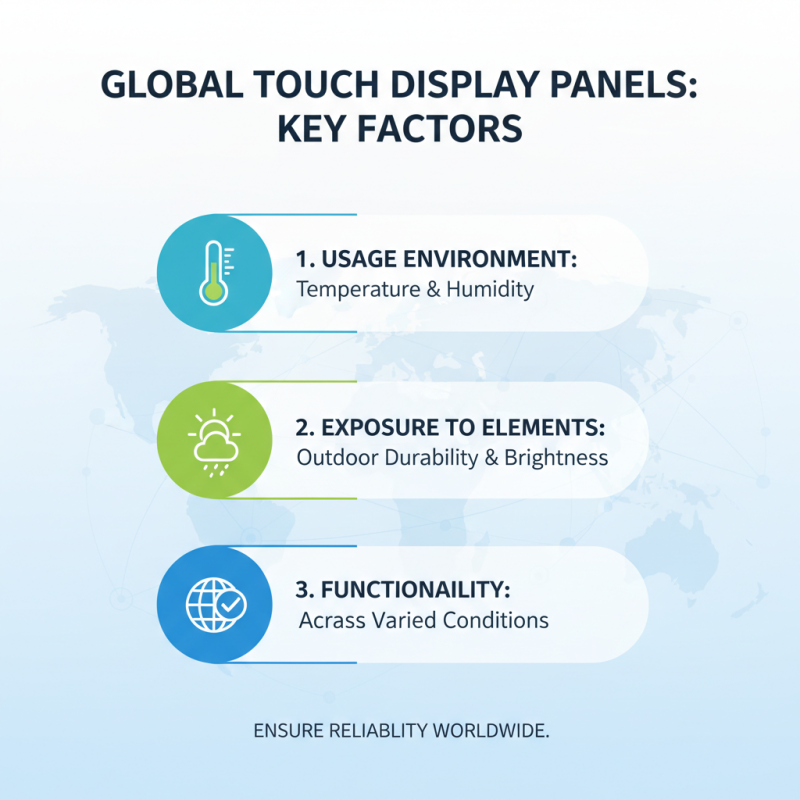
When purchasing touch display panels for global applications, it's essential to evaluate the specific usage environment. Consider factors such as temperature, humidity, and exposure to elements. Different environments require different specifications. For instance, a panel used outdoors must have enhanced durability and brightness. The right choice ensures functionality across varied conditions.
Next, pay attention to the technology behind the touch display. Capacitive panels are popular for their responsiveness but may not work well with gloves. Resistive panels, on the other hand, function with any touch input but may lack clarity. Reflect on the specific needs of your project. It’s crucial to match the technology with user requirements to avoid underperformance.
Lastly, check for compatibility with the intended hardware and software systems. This ensures smooth integration, which can save time and costs. Researching technical specifications is vital. Precision in selecting the right parameters can minimize future issues. Aim for reliability, as poor choices can lead to significant project setbacks. Thoughtful consideration now can enhance overall satisfaction later.
Market Trends: Global Demand for Touch Display Panels and Key Growth Areas
The global demand for touch display panels has surged in recent years. Many industries are embracing this technology, ranging from automotive to healthcare. Touch panels enhance user interaction and offer sleek design options. The rise of smart devices is a key driver of this growth. These devices require more intuitive interfaces that touch display panels provide.
Market trends indicate that Asia-Pacific leads in demand, influenced by significant manufacturing capabilities. North America and Europe also show robust interest, particularly in premium applications. Yet, challenges remain, such as fluctuations in raw material costs. As manufacturers prioritize sustainability, recyclable materials are becoming crucial. More companies seek eco-friendly solutions, but the transition can be slow.
Design innovation is essential in capturing market share. Firms must remain agile and responsive to consumer preferences. Balancing functionality and aesthetics often leads to complex decisions. Some companies struggle with supply chain management, affecting delivery times. Adapting to these challenges requires strategic planning and foresight. The path to growth is not always straightforward; continuous improvement is vital for success.
Evaluating Touch Display Panel Manufacturers: Quality, Certification, and Support
When evaluating touch display panel manufacturers, quality is paramount. Check the materials used in their products. High-quality components lead to better durability and performance. A reliable manufacturer often provides detailed specifications. This transparency builds trust and ensures you get what you pay for.
Certification is another crucial aspect. Look for compliance with industry standards. Certificates indicate that a manufacturer adheres to best practices. This reduces the risk of future issues. However, not all certifications carry equal weight. Research the credibility of the certifying bodies.
Support from manufacturers can be a game-changer. Pre-sales support helps clarify features and compatibility. Post-sales service is equally important. Efficient customer service can assist with installation or troubleshooting. Companies that provide comprehensive support are often more reliable. They show commitment to their customers. However, it is essential to evaluate their responsiveness. Sometimes, even reputable brands can disappoint in this area.
Pricing Insights: Budgeting for Touch Display Panels Across Different Regions
Pricing for touch display panels varies significantly across different regions. In North America, average prices range from $200 to $600 per unit, influenced by advanced technologies and higher labor costs. In contrast, prices in Asia may fall between $100 and $400. This discrepancy often reflects regional manufacturing capabilities and economic conditions.
Market research indicates that factors such as material quality and display size are pivotal in determining pricing. For example, a 10-inch display panel utilizing capacitive technology typically costs around $120 in Asia. In Europe, the same panel could exceed $300 due to import tariffs and logistics costs. Such variations challenge global buyers to consider not only initial investments but also long-term expenses.
Buyers should weigh the trade-offs between cost and quality. Opting for cheaper panels might lead to reliability concerns. The quality of components can significantly affect durability. Balancing budget constraints with performance expectations is crucial for informed purchasing decisions. Understanding regional pricing structures can aid buyers in making better choices.
Touch Display Panel Pricing Insights by Region