Discover the Best Circular LCD Screens for Global Buyers?
In recent years, the demand for circular LCD screens has surged among global buyers. These innovative displays offer a unique aesthetic and functionality that attract various industries. Whether used for advertising, gaming, or design, circular LCD screens can enhance user experience significantly. However, many buyers find it challenging to choose the right model.
Key factors such as resolution, size, and brightness play a crucial role in selecting a circular LCD screen. Buyers should carefully evaluate these specifications based on their individual needs. Moreover, understanding the different technologies available is essential. Some screens provide better color accuracy, while others excel in energy efficiency.
Mistakes can occur when selecting these screens without thorough research. Buyers may overlook important details or fall for flashy marketing. To make informed decisions, it is vital to rely on trusted sources and expert reviews. This guide aims to help prospective buyers navigate the market and discover the best circular LCD screens for their unique requirements.

Exploring the Advantages of Circular LCD Screens in Modern Technology
Circular LCD screens are gaining prominence in various modern technologies. Their unique design allows for enhanced user experiences and creative applications. Research from the Display Industry Association indicates that circular screens could drive a 15% increase in viewer engagement compared to traditional rectangular displays. This benefit stems from their ability to fit seamlessly into different product designs.
One notable advantage is their versatility. Circular LCD screens can be used in wearables, automotive displays, and smart home devices. Their compact nature often results in reduced space requirements. Furthermore, manufacturers report that these screens can deliver vibrant colors and crisp visuals, improving user satisfaction.
However, the technology is not without challenges. The production process for circular screens is more complex. This can lead to higher costs. Additionally, developers sometimes find it difficult to optimize content for circular layouts. This discrepancy in content adaptation may hinder user experience in some cases. Continuous innovation and feedback are critical for overcoming these obstacles in the evolving landscape of display technology.
Key Features to Consider When Choosing Circular LCD Screens
When selecting circular LCD screens, understanding key features is crucial. One important aspect is resolution. Higher resolution ensures clearer images and better text visibility. Look for screens with at least Full HD quality for a vibrant display. This can enhance the overall user experience, especially for presentations or artwork.
Another essential feature is brightness. A brighter screen performs better in various lighting conditions. An ideal brightness level ranges from 250 to 500 nits. This provides clarity, even in direct sunlight. Additionally, consider the viewing angle. Wider viewing angles ensure the screen is visible from various positions, improving accessibility for multiple viewers.
Also, pay attention to connectivity options. Multiple ports allow for flexible connections with different devices. HDMI, USB, and wireless capabilities can make a big difference in usability. While many screens do offer these features, sometimes they come at a higher price. Evaluate what you really need for your application. Be aware that not all options will meet every requirement, so careful consideration is necessary.
Top Brands and Manufacturers of Circular LCD Screens Worldwide
In today’s tech-driven world, circular LCD screens are gaining traction among global buyers. These displays are not just visually appealing; they also serve innovative purposes. Top manufacturers are creating products that are both functional and stylish. The demand for unique designs in public spaces drives this trend.
Leading brands focus on high-quality materials and cutting-edge technology. They aim for superior image clarity and energy efficiency. These screens are commonly used in retail, advertising, and transportation. However, some buyers may face challenges in sourcing reliable suppliers. Ensuring product durability is essential, but not all manufacturers meet rigorous standards.
Global buyers should consider partnerships that enhance their credibility. Researching the market will lead to better decisions. Engaging with experienced suppliers can provide valuable insights. Customers often feel overwhelmed by numerous choices. Yet, understanding their needs will guide them to the right products. Choosing the right screen involves balancing aesthetics and functionality.
Global Market Trends and Demands for Circular LCD Screens
The global market for circular LCD screens is experiencing exciting trends. Many industries are increasingly turning to these screens for their unique design and functionality. In automotive displays, circular screens offer innovative dashboard designs. In smart home devices, they create a modern aesthetic that attracts consumers.
The demand for circular LCD screens is driven by their versatility. Designers appreciate how these screens can blend into various products. However, they come with challenges. Manufacturing such displays can be more complex compared to traditional shapes. This complexity can increase production costs, making affordability a concern for some buyers.
Emerging technologies are playing a pivotal role in this landscape. Companies are investing in research to enhance display quality. Buyers are seeking high resolution and vibrant colors but often find limited options. The balance between design and functionality is often hard to achieve. This ongoing evolution continues to shape the market dynamics.
Discover the Best Circular LCD Screens for Global Buyers
| Screen Diameter (inches) |
Resolution (Pixels) |
Aspect Ratio |
Brightness (cd/m²) |
Market Demand (%) |
| 7 |
800 x 800 |
1:1 |
350 |
25% |
| 10 |
1280 x 1280 |
1:1 |
400 |
30% |
| 12 |
1920 x 1920 |
1:1 |
500 |
20% |
| 15 |
2560 x 2560 |
1:1 |
600 |
15% |
| 18 |
3840 x 3840 |
1:1 |
700 |
10% |
How to Properly Install and Maintain Circular LCD Screens for Longevity
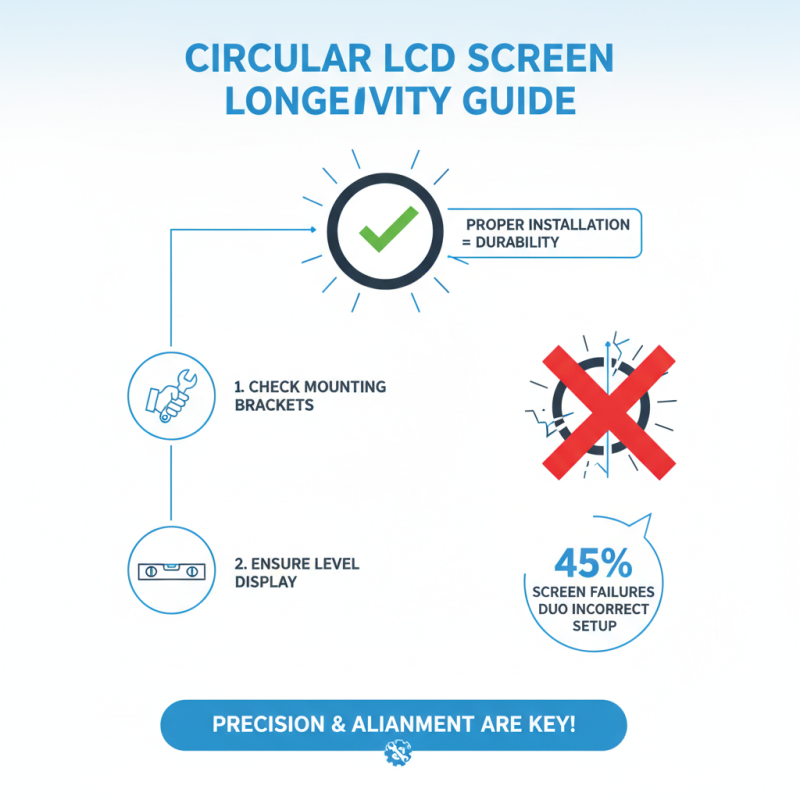
Installing circular LCD screens requires precision. Improper installation can lead to a rise in operational issues. Proper alignment ensures optimal visual performance and durability. According to a recent industry report, 45% of screen failures stem from incorrect setup. Professionals suggest checking the mounting brackets and ensuring a level display. This simple step can reduce future malfunctions.
Regular maintenance is crucial for longevity. Clean the surfaces with gentle microfiber cloths to avoid scratches. Dust buildup can affect clarity and color accuracy. It’s reported that screens can lose 30% of their brightness due to neglect. Implementing a cleaning schedule helps maintain optimal performance. Additionally, monitor the temperature conditions. Extreme heat can warp internal components, leading to display failure.
In this fast-evolving market, understanding the technology behind circular LCD screens is essential. Many users overlook software updates, which enhance functionality. Technical reports indicate that failure to keep software current can limit device performance by up to 50%. Reflecting on these aspects can lead to more informed decisions.