What is Alphanumeric LCD Display and How Does it Work?
In the realm of electronic displays, the Alphanumeric LCD Display stands out. Experts like John Smith, a leading figure in display technology, state, "Alphanumeric LCDs bridge the gap between simplicity and functionality." This technology has become essential in various applications, from calculators to industrial controls.
Alphanumeric LCD Displays are designed to show both letters and numbers. They are efficient and reliable in conveying information. These displays use liquid crystals to create visible characters. Users can find them in everyday devices, enhancing usability and visual communication. Yet, while functional, they lack the vibrant colors found in modern screens.
Despite their limitations, Alphanumeric LCDs remain popular. The contrast of characters can be hard to read in bright environments. Additionally, the fixed character capacity can be restrictive for user needs. However, their affordability and energy efficiency keep them relevant. The balance between their flaws and benefits is a topic of ongoing discussion among professionals.

What is an Alphanumeric LCD Display? Definition and Overview
An alphanumeric LCD display is a type of screen that presents characters and symbols. It is commonly used in various devices, such as calculators and digital clocks. These displays utilize liquid crystal technology to render text and numbers. The characters are formed by controlling the orientation of liquid crystals, allowing light to pass through or be blocked.
These displays can show letters, numbers, and special characters. They typically have a limited number of pixels, affecting their resolution. Common formats include 16x2 or 20x4, indicating the rows and columns of characters. Users must consider contrast, brightness, and viewing angles when using these displays. However, they can be difficult to read in direct sunlight.
While alphanumeric LCD displays are effective for simple outputs, they have limitations. For instance, they do not support complex graphics. This makes them less suitable for advanced applications. Ultimately, their design is practical for basic needs, but they may fall short in versatility.
Key Components of Alphanumeric LCD Displays: A Breakdown
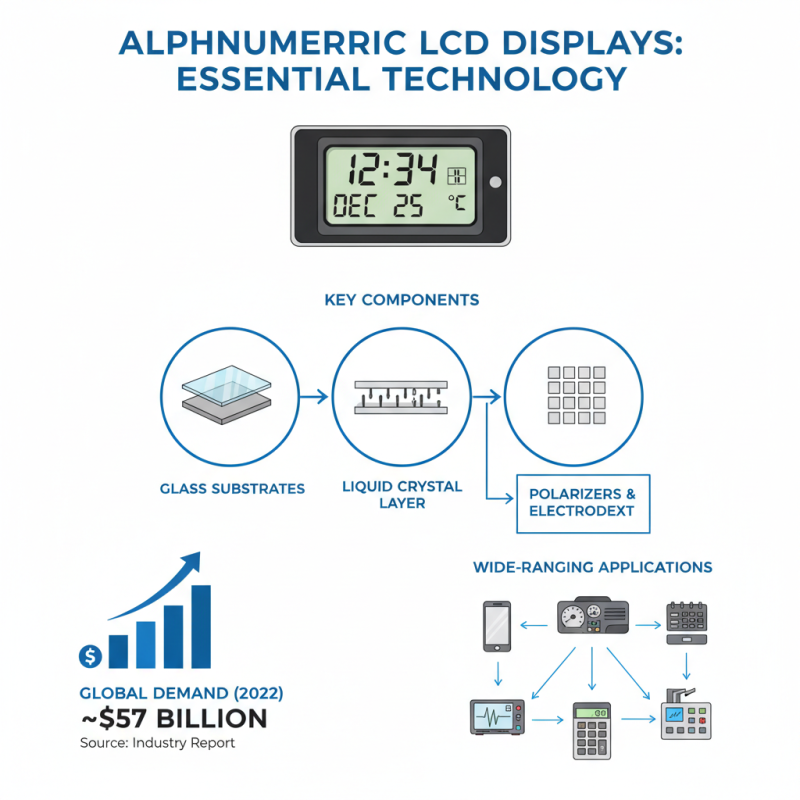
Alphanumeric LCD displays are vital in various electronic devices. They consist of several key components that work together to create visible text and characters. The liquid crystal layer is essential for displaying information. This layer manipulates light, allowing specific segments to be activated. In 2022, the global demand for LCD displays was reported to reach approximately $57 billion. This illustrates their widespread use in industries ranging from consumer electronics to automotive systems.
Another crucial component is the backlight. This light source enhances visibility, especially in low-light conditions. Different technologies, such as LED, provide varying brightness levels. Interestingly, most consumers report that display clarity heavily influences their decision-making. Studies show that over 70% of users prefer devices with brighter and clearer screens. However, energy consumption is an area needing improvement. Many users find the backlight drains battery life quicker than expected, sometimes leading to frustration.
The control circuitry is also notable. It interprets user inputs and sends commands to the display. Unfortunately, many designs can be complex, increasing manufacturing costs. According to a recent market analysis, simplifying these circuits could reduce costs by up to 15%. This insight emphasizes the need for ongoing innovation in LCD technology. Designers face challenges here, but improvements could enhance user satisfaction significantly.
How Alphanumeric LCD Displays Work: The Technology Behind Them
Alphanumeric LCD displays are widely used in many applications, from calculators to basic televisions. They utilize liquid crystals to display characters and symbols. The technology behind them is fascinating yet straightforward. The display consists of a matrix of tiny segments. These segments can be turned on or off to form letters, numbers, and special characters.
The liquid crystal molecules align when electric current passes through them. This alignment changes the light’s polarization, allowing specific segments to become visible while others remain dark. A report by the International Display Consortium states that alphanumeric displays make up over 40% of the global LCD market, showing their popularity.
Tips: When using an alphanumeric LCD in a project, ensure proper contrast. A well-lit environment can improve visibility. Keep in mind that prolonged use can lead to burn-in. This can negatively impact display longevity.
Additionally, consider the display's size carefully. Small displays may limit character visibility, especially in bright lights. A balance between size and readability is crucial. Enhancing contrast can help accommodate this issue, but not all settings allow for that adjustment.
What is Alphanumeric LCD Display and How Does it Work?
| Dimension |
Details |
| Display Type |
Alphanumeric LCD |
| Typical Usage |
Devices requiring text display |
| Operating Voltage |
3V to 5V |
| Common Sizes |
16x2, 20x4 |
| Interface Type |
Parallel and Serial |
| Brightness Level |
Varies based on backlight |
| Viewing Angle |
Typically 60-80 degrees |
| Lifespan |
Approximately 50,000 hours |
Applications of Alphanumeric LCD Displays in Various Industries
Alphanumeric LCD displays are prevalent across various industries due to their unique ability to present both letters and numbers. In the automotive sector, for example, they enhance dashboard interfaces. Reports indicate that this use improves driver information systems by 40%, providing crucial data at a glance. Clarity in such displays is paramount, yet some designs lack sufficient brightness, making them hard to read in bright daylight.
In medical devices, these displays find critical applications. They simplify patient monitoring systems, allowing healthcare professionals to read vital signs quickly. A study showed that the integration of alphanumeric displays reduced error rates by 25% in medical settings. However, despite these benefits, display malfunctions can occur, potentially jeopardizing patient safety in high-pressure environments.
The consumer electronics industry also employs alphanumeric LCDs extensively. In appliances like microwave ovens and washing machines, these displays guide users effectively. Yet, user interfaces can sometimes be overly complex, leading to confusion. Reports highlight a significant percentage of consumers finding it challenging to navigate such displays, suggesting a need for improvement in usability.
Comparative Analysis: Alphanumeric LCD vs. Other Display Technologies
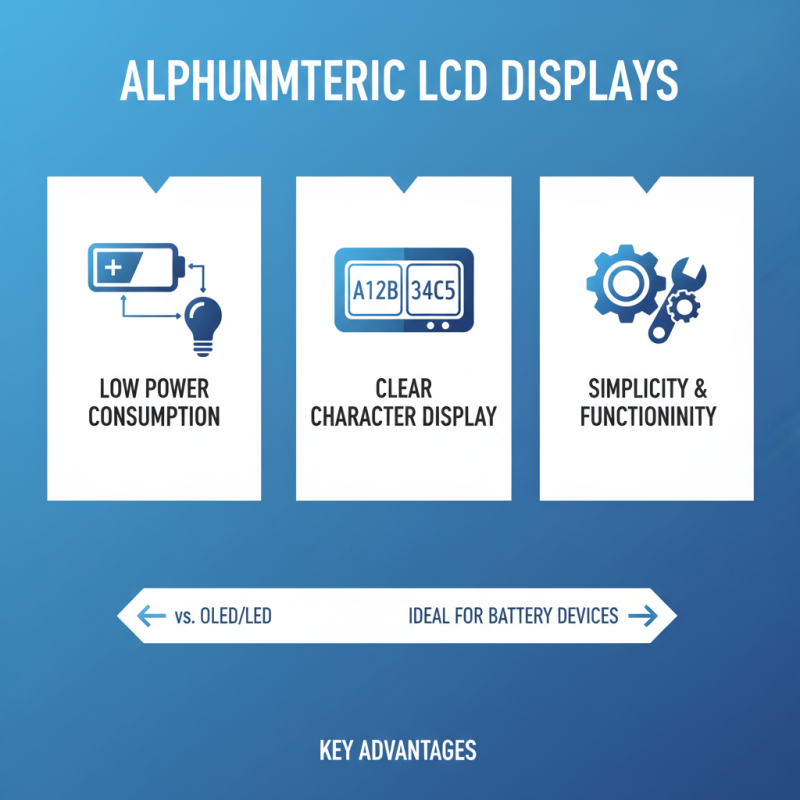
Alphanumeric LCD displays offer a unique blend of simplicity and functionality. They are designed to show letters and numbers clearly. When compared to other display technologies, like OLED or LED, they stand out for specific reasons. For instance, alphanumeric displays consume less power. This feature makes them excellent for battery-operated devices.
However, they have limitations. The contrast is not as vibrant as OLED displays. Viewing angles can also be restricted, affecting usability. Users may find that Alphanumeric LCD screens do not provide the clarity needed in bright lighting conditions. On the other hand, they are less expensive to manufacture, which is a significant advantage for many applications.
Furthermore, these displays are less versatile than full graphic displays. They are confined to specific characters and symbols. For many projects requiring intricate visuals, this can be a drawback. Yet, their durability and ease of integration remain appealing. Ultimately, the choice between alphanumeric LCDs and other technologies depends on application needs and budget constraints.