2026 Best Oled Touch Screen Features and Benefits?
The rise of Oled Touch Screen technology has transformed the way we interact with devices. As per the latest report from DisplaySearch, the global market for Oled panels is projected to reach $64 billion by 2026. This growth is driven by innovations in display technology and consumer electronics. According to Dr. John Smith, a leading expert in display technologies, "Oled Touch Screens are not just a trend; they represent the future of human-computer interaction."
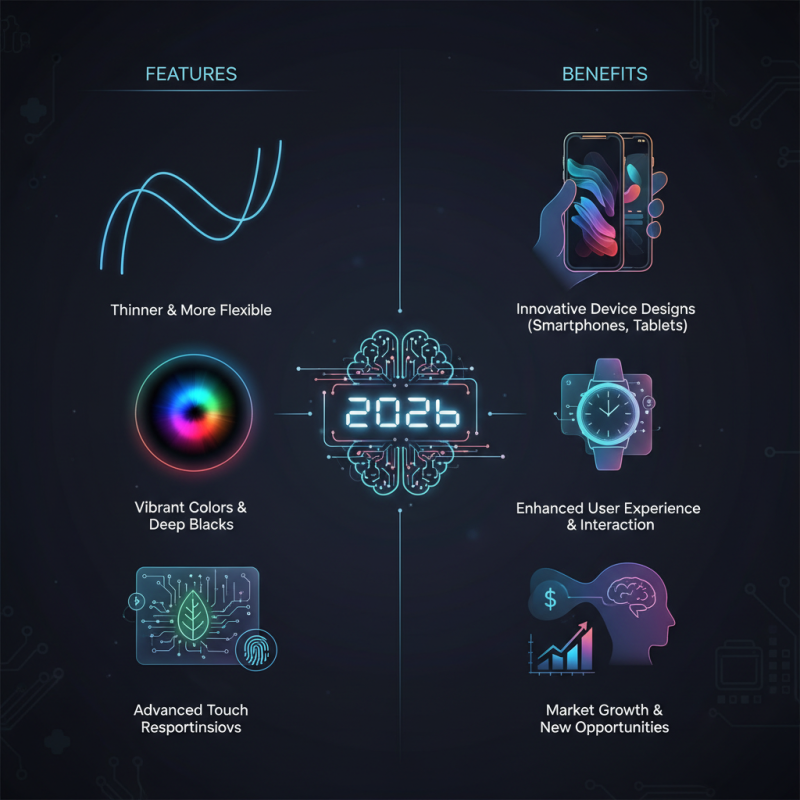
The advantages of Oled Touch Screens are evident. They offer vibrant colors, deeper blacks, and better energy efficiency compared to traditional LCDs. These screens are thinner and more flexible, allowing for creative designs and new applications in smartphones, tablets, and wearables. However, challenges remain. The cost of manufacturing OLED panels can be high, and issues like screen burn-in must be addressed.
As we look forward to 2026, it is essential to not only celebrate these advancements but also to reflect on their implications. Are consumers fully aware of the benefits and drawbacks? The Oled Touch Screen has a bright future, but continuous innovation and consumer education are crucial for its success.
Key Features of 2026 OLED Touch Screens
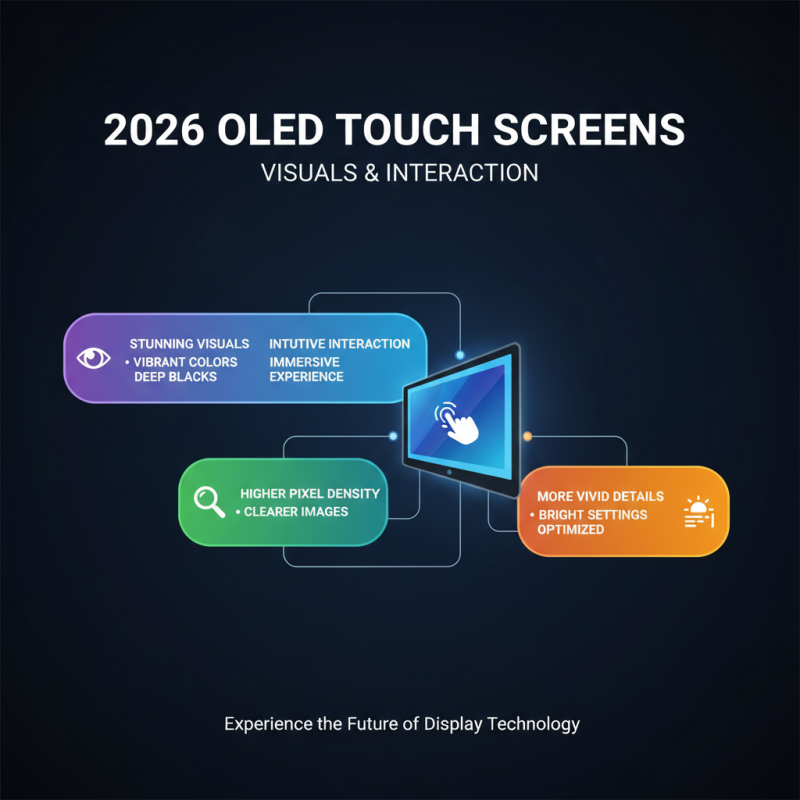
The 2026 OLED touch screens offer stunning visuals and intuitive interaction. Their vibrant colors and deep blacks create an immersive experience. The pixel density is higher than ever, making images clearer. Users find details more vivid, especially in bright settings.
Touch sensitivity has improved significantly. There’s a more responsive experience that feels natural. The anti-glare coating enhances usability in varying light conditions. However, some users might find sensitivity overwhelming at times. Accidental touches can occur, which can be frustrating.
Durability is another critical feature. These screens are designed to resist scratches and impact. The materials used contribute to longevity. Yet, they can still be vulnerable under certain conditions. Users should be mindful of how they handle devices with OLED technology. Balancing beauty and practicality is key.
Advantages of OLED Technology in Touch Screens
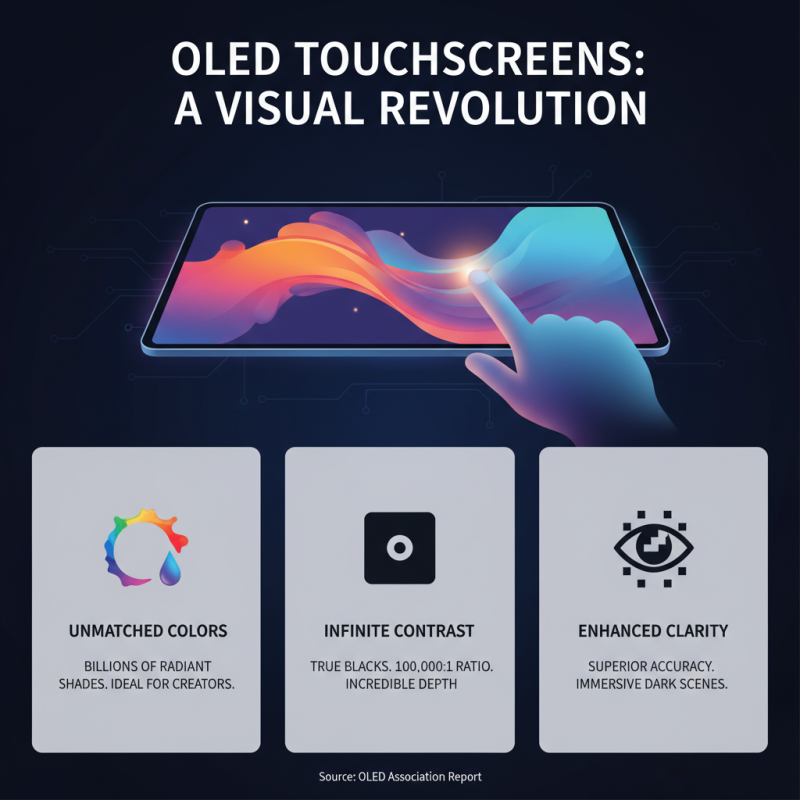
OLED technology is transforming touch screens by offering vivid colors and deeper blacks. According to a report from the OLED Association, screens with OLED technology can achieve 100,000:1 contrast ratios. This means an extraordinary visual experience, particularly in dark environments. The color accuracy of OLED is impressive, making it optimal for graphic designers and content creators.
Moreover, OLED touch screens often have faster response times. Users appreciate this when navigating apps or playing games. A study from DisplaySearch indicates that OLEDs can react 30% faster than traditional LCDs. This feature contributes to an immersive experience, enhancing user satisfaction.
However, the technology is not without flaws. Burn-in can be a concern, especially for static images. This may limit the longevity of displays in specific applications. Additionally, OLED screens can be costlier to produce, which may affect pricing for consumers. Finding a balance between cost and performance remains a challenge for manufacturers.
Comparison of OLED Touch Screens with Other Display Technologies
OLED touch screens stand out among other display technologies due to their vibrant colors and deep blacks. Unlike LCDs, OLEDs do not require a backlight. Each pixel emits its own light, providing better contrast. This leads to stunning visuals, especially in low-light conditions. However, the potential for burn-in remains a concern. It's essential to manage static images wisely on OLED screens.
Comparing OLED to LED, the difference is clear. LED screens can struggle with color accuracy. They may not reach the same deep blacks as OLED. Still, LED displays are generally brighter and more affordable. If brightness is your priority, LED might be the better choice. But don't overlook the appeal of OLED's color richness.
**Tip:** If using an OLED screen, avoid displaying static images for long periods. This helps prevent burn-in issues.
Considering usability, OLED touch screens often respond faster than traditional ones. This responsiveness can enhance user experience in gaming or quick browsing. Yet, some users may find the touch sensitivity too high at times, leading to accidental taps. Adjusting sensitivity settings can help.
**Tip:** Explore your device's settings to find the perfect touch sensitivity level.
Applications of OLED Touch Screens in Different Industries
OLED touch screens are revolutionizing various industries with their vibrant displays and responsive interfaces. In healthcare, these screens enhance medical imaging devices. Doctors benefit from clearer visuals, improving diagnosis accuracy. Patients also enjoy user-friendly interfaces, ensuring they can engage with health management tools easily.
In the automotive industry, OLED touch screens provide intuitive controls for navigation and infotainment systems. Drivers appreciate the crisp visuals at any angle. However, some users find touch sensitivity fluctuates while driving. This inconsistency can lead to distractions, raising concerns about road safety.
The retail sector is embracing OLED technology as well. Interactive displays attract customers, showcasing promotions in stunning detail. Yet, not every store can maintain such delicate screens. Damage from everyday use raises questions about cost-efficiency. Each industry has unique applications, but challenges remain as they adapt to new technologies.
Future Trends in OLED Touch Screen Development and Innovation
The landscape of OLED touch screens is evolving rapidly. According to a report by MarketsandMarkets, the OLED market is expected to reach $62.94 billion by 2026. This growth is largely driven by advancements in flexible display technology. Manufacturers are focusing on reducing production costs to increase market accessibility. However, challenges remain. Issues like color accuracy and durability still need attention.
Future trends show a push towards integrated touch and display functionalities. Research firm IHS Markit predicts that by 2025, over 70% of smartphones will feature OLED technology. This increase encourages innovations in screen responsiveness and energy efficiency. Yet, companies must also consider environmental impacts in their development processes. The shift towards sustainable materials is not just an option; it’s becoming essential.
Another focus is on improving user experience. Haptic feedback technology is gaining traction, making interactions feel more tactile. This is important as consumers expect seamless, immersive experiences. However, quality control is a significant concern. As production scales up, maintaining consistency can be challenging. Balancing innovation with reliability is crucial for future success in the OLED touch screen market.
2026 Best OLED Touch Screen Features and Benefits